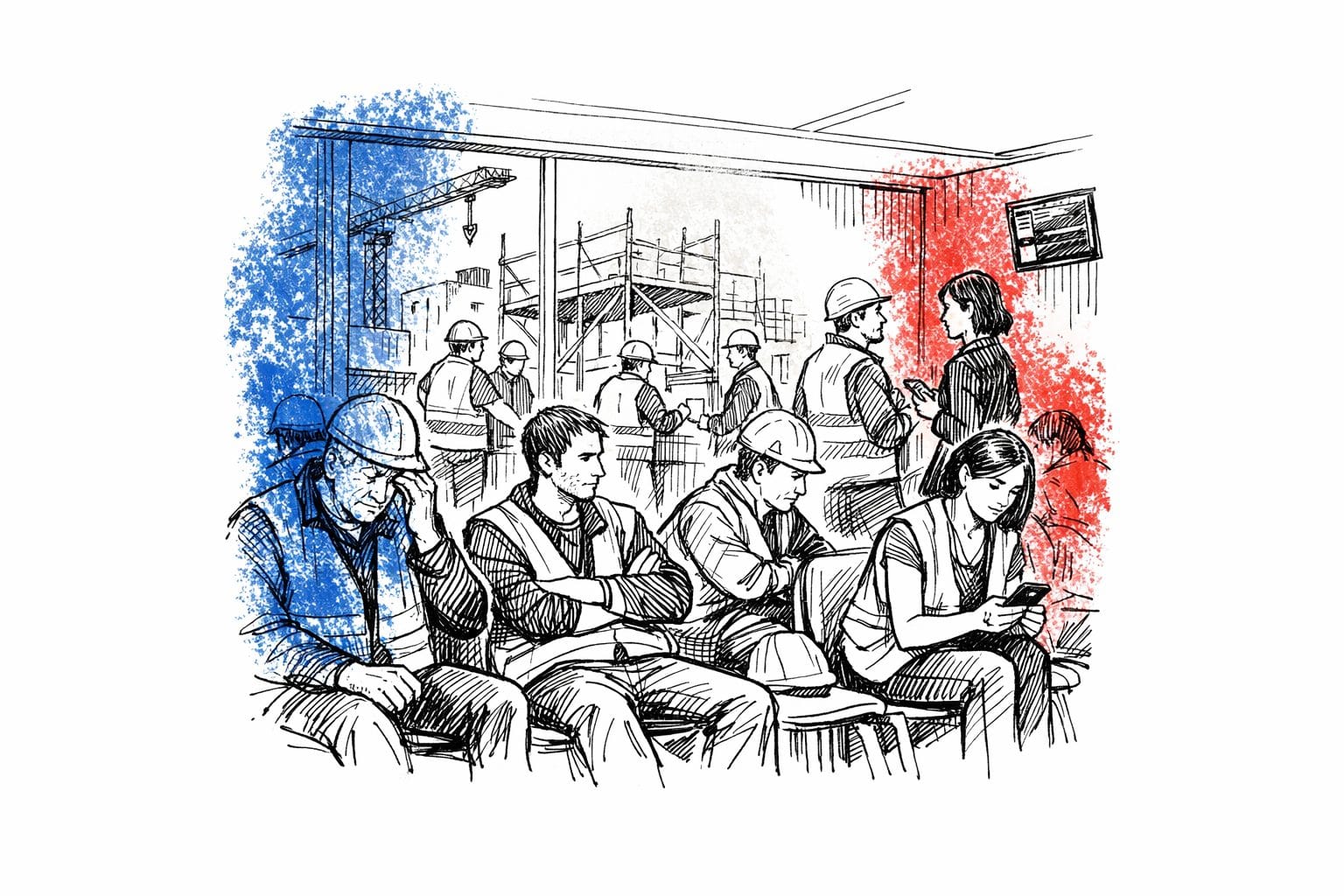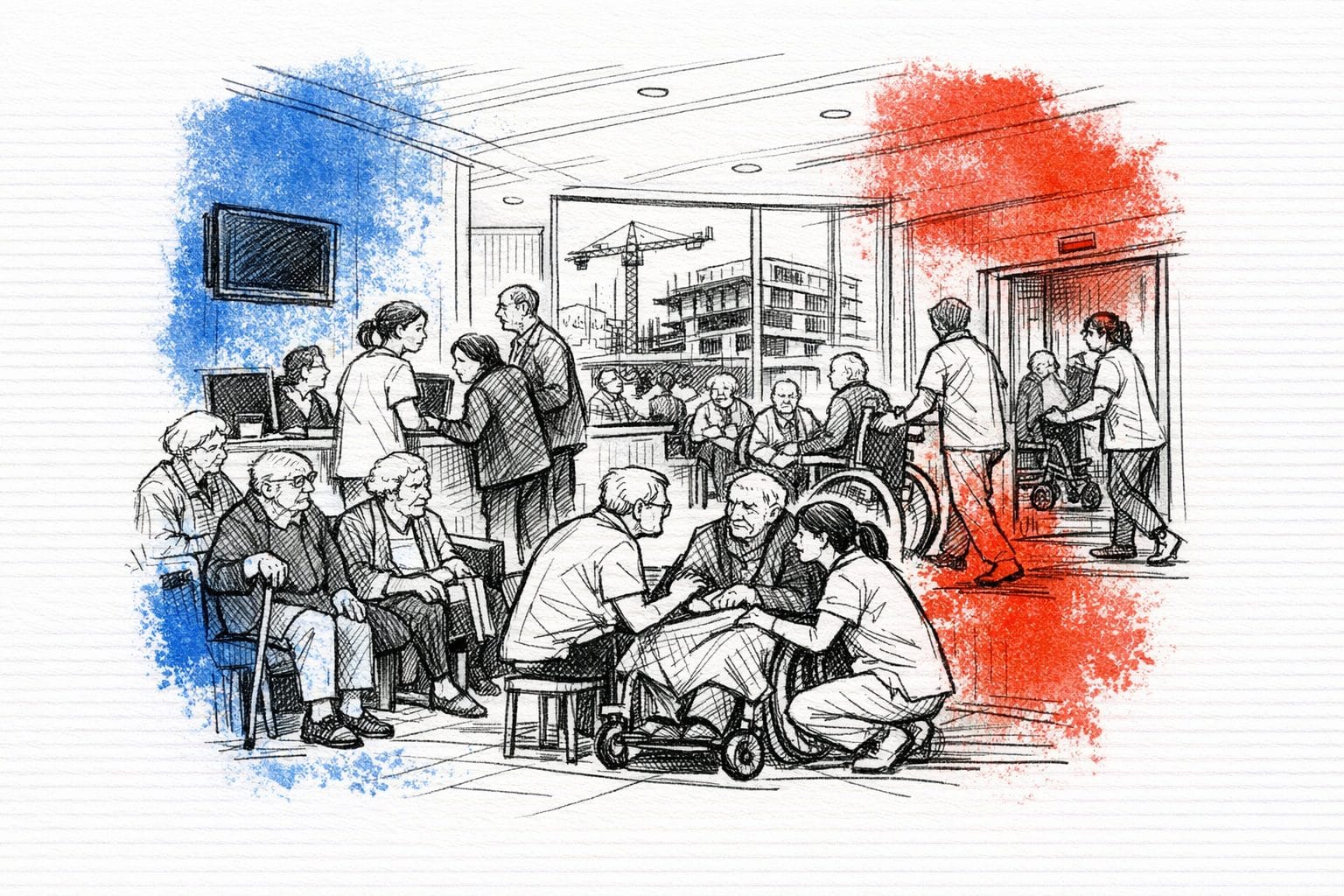
Wastewater surveillance networks can signal a rise in transmission before indicators of healthcare use, including emergency visits, increase. In Canada, 30% of the population is covered by such a network; in the United States, 1,244 sites transmit data to the Centers for Disease Control and Prevention, covering 44% of the population. In both countries, the institutional chain that transforms this signal into decision remains fragmented.
The essentials
- Canada monitors 30% of its population through wastewater; the United States covers 44% with 1,244 active sites, according to the Public Health Agency of Canada and the CDC.
- These networks detect pathogens several days before healthcare systems become overwhelmed, but early warning only protects if a local authority is ready to act on the data received.
- In 2025, the Canadian program expanded screening to include measles, confirming that the infrastructure built during COVID can monitor other diseases.
- Funding remains cyclical: built in a crisis, it risks eroding between two crises, weakening a capacity whose value lies precisely in existing before the next one.
- The true limitation is not technical: the data exist, but the local decision protocols that exploit them remain piecemeal on both sides of the border.
Pathogens detected in wastewater before they appear in hospitals
A patient who consults a doctor represents only a fraction of epidemiological reality. Many infected people never present themselves to a clinic: because their symptoms are mild, because they lack access to care, or because they don’t yet know they’re sick. Wastewater, however, doesn’t lie through omission. Every household connected to a sanitation network contributes a continuous signal, independent of the population’s medical behavior.
This property has a technical name: environmental surveillance. It rests on the fact that many pathogens, including SARS-CoV-2, are shed in feces before clinical symptoms appear. A laboratory analyzing water from a treatment plant can detect a rise in viral load several days before emergency rooms begin to fill. According to the CDC, wastewater can constitute an early indicator ahead of clinical cases or healthcare use, though no official general timeframe has been established for respiratory infections.
The value of this lag is not incidental. Four to seven days, in theory, are enough to trigger a targeted vaccination campaign, alert nursing homes in a catchment area, adjust medication stocks in a hospital pharmacy, or communicate with vulnerable populations. In theory.
Two countries, two networks, one shared problem
Canada launched its federal wastewater surveillance program at the height of the COVID-19 pandemic. In February 2026, according to the Public Health Agency of Canada’s 2025-2026 Departmental Performance Report, this network covered 30% of the national population and had expanded screening for measles at multiple sites. This expansion marks a turning point: the infrastructure, initially designed to track a single virus, proves it can monitor a wider range of pathogens.
In the United States, the CDC’s national program, also launched during the pandemic, reached 1,244 active sites between September and October 2026, covering a significant share of the population. The American network notably tracks influenza A, SARS-CoV-2, RSV, measles, mpox, and avian influenza A(H5). Diversification is real, and geographic coverage is broader than in Canada.
Both systems share a structural limitation: their coverage remains partial. Thirty percent in Canada means 70% of the population, often rural or living in small municipalities, remains off the radar. Forty-four percent in the United States leaves more than half the country unmonitored. Uncovered areas frequently correspond to territories with the fewest response capacities, and therefore those that would benefit most.
Detection without decision: a signal that stays in the pipes
Detecting a pathogen in a city’s wastewater protects no one if the relevant actors don’t know what to do. In both systems, the data exist, but the local decision protocols that exploit them are not harmonized.
In Canada, data flow upward to the federal Public Health Agency, which aggregates and publishes them. But public health action unfolds at the provincial and municipal level. The chain from the federal signal to local decision involves multiple actors, each with their own priorities and capacities. A municipality receiving an alert signal for measles must mobilize its health services, coordinate with the province, and communicate with the population. Such coordination doesn’t happen spontaneously: it requires established protocols, trained personnel, and available resources.
In the United States, the structure is even more fragmented. The CDC aggregates national data, but public health remains a state and county responsibility. A signal detected in Cincinnati passes through multiple administrative levels before triggering local action. Prior coordination between local actors and formalized protocols allow full exploitation of surveillance data.
The example of measles illustrates the problem concretely. In 2025, an outbreak in Canada was tracked through wastewater surveillance in southwestern Ontario, primarily in Leamington with supplementary measures in Windsor, as documented in a study published in the CDC’s journal Emerging Infectious Diseases. The signal was localized and correlated with cases, but it did not provide early warning of the epidemic in that study. However, the campaign targeted agricultural workers in dormitories, and local wastewater collection constraints complicated interpretation of its signal.
Cyclical funding, enemy of permanent prevention
Public health infrastructure has a congenital flaw: its value is measured by what it prevents, not by what it produces. A well-functioning surveillance network is one you hear little about. This invisibility of success makes funding politically unstable.
The Canadian program benefited from significant federal investments during the pandemic. The question of sustaining its budget after the emergency period remains open. The 2025-2026 Departmental Performance Report documents achievements, but does not resolve the long-term funding model. In the United States, the CDC program faced a risk of termination or reduction in 2024 due to lack of base funding, as it remained funded through emergency COVID-19 credits. This episode illustrates structural fragility: a network whose value depends on its permanence can be interrupted precisely because its value is invisible.
This problem is not unique to wastewater surveillance. It affects all infrastructure for pandemic preparedness, whether emergency medicine stockpiles, vaccine manufacturing capacity, or pandemic simulation exercises. Preparedness for health crises everywhere suffers from the same cognitive bias: we invest in care, which produces visible and immediate effects, more than in prevention, whose return on investment is measured in crises avoided.
Economic logic, however, points in a clear direction. Early detection that prevents hospitalization produces economic benefit. But this gain is diffuse, spread across thousands of households who will never know they might have fallen ill. It doesn’t concentrate in a clear accounting balance sheet visible to a public treasurer.
Transforming crisis infrastructure into permanent service
The challenge for the coming decade is institutional, not technical. It is about anchoring in permanent public health structures a capacity built in emergency.
Several approaches are being studied on both sides of the border. The first is formal integration into existing epidemiological surveillance systems. Rather than maintaining parallel programs created during COVID, some American states are beginning to merge wastewater data with their infectious disease reporting systems. The goal is to create a single dashboard that local officials consult the way they check weather forecasts before deciding on actions.
The second approach is localizing the signal. A network monitoring a two-million-person metropolis provides aggregated signal useful for major decisions but poorly actionable for a neighborhood doctor or school director. Pilot projects in Canada and several American states test sensors at neighborhood scale, on a university campus, or in long-term care facilities. This granularity transforms a population-level indicator into a local operational tool.
The third approach is expansion to new pathogens. The Canadian network demonstrated with measles that the infrastructure is adaptable. Work is underway to integrate surveillance of antibiotic-resistant strains, whose presence in wastewater can signal infection clusters before any clinical diagnosis. Antibiotic resistance ranks among the most documented health risks for the coming decades, and environmental surveillance could become one of the rare tools capable of detecting it at population scale.
Current choices tested against the 2026-2035 period
The two North American networks are at a pivotal moment. They have demonstrated their technical capacity during the pandemic. They have proven, with measles, that they can evolve beyond their initial mission. The question now is whether they can be sustainably institutionalized.
Two trajectories are plausible. In the first, programs remain crisis devices: funded in bursts, maintained by passionate defenders within public health agencies, but never truly integrated into ordinary governance. Each new emergency revitalizes them; each lull weakens them. Coverage of 30% in Canada and 44% in the United States will become, in this scenario, a ceiling rather than a floor.
In the second trajectory, both countries take the step toward institutionalization. Funding becomes recurring, predictable, written into public health laws rather than emergency envelopes. Local decision protocols are formalized, tested through regular simulation exercises, and integrated into public health official training. Coverage advances toward levels allowing surveillance of rural areas and peripheral populations, precisely those the healthcare system reaches least well.
The signals that will distinguish these trajectories are already visible. The first is budgetary: the next federal funding cycles in the United States and Canada will reveal whether these programs are treated as ordinary public health spending or as lines cut in times of austerity. The second is institutional: if the pandemic accord negotiated under the World Health Organization umbrella succeeds, it could establish international norms for environmental surveillance and force signatory states to maintain minimum capacities. The third is technical: expansion to antibiotic resistance or emerging pathogens would give networks permanent justification independent of COVID memory.
The question of financing public health goods joins here a broader structural problem: public systems tend to fund what can be immediately measured, at the expense of what protects over the long term. Wastewater surveillance is a textbook case of this bias. Its cost is visible, concentrated, inscribed in budgets. Its benefit is invisible, diffuse, distributed across crises that won’t occur.
North American experience since 2020 has shown that early detection infrastructure can operate at large scale. Documented examples exist, notably Israel’s systematic national poliovirus surveillance in wastewater outside epidemic periods. This maintenance capacity, more than sensor sophistication, will be decisive for the next epidemics to find an operational system in place.
Sources
- Public Health Agency of Canada, 2025-2026 Departmental Performance Report, canada.ca
- CDC, About CDC’s Wastewater Monitoring Program, cdc.gov
- CDC / Emerging Infectious Diseases, Wastewater Surveillance to Track Resurgent Measles Outbreak, Ontario, Canada, 2025, wwwnc.cdc.gov