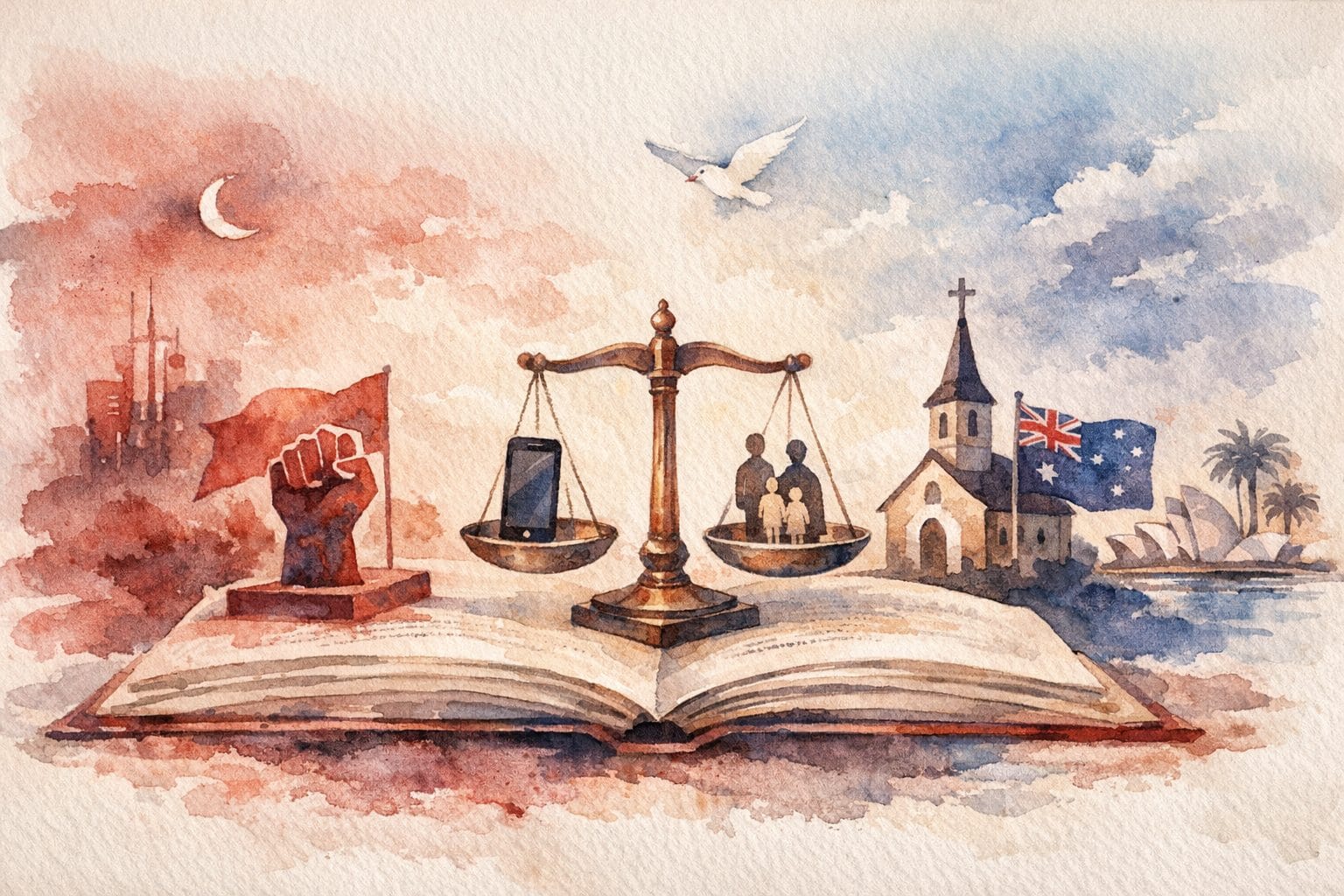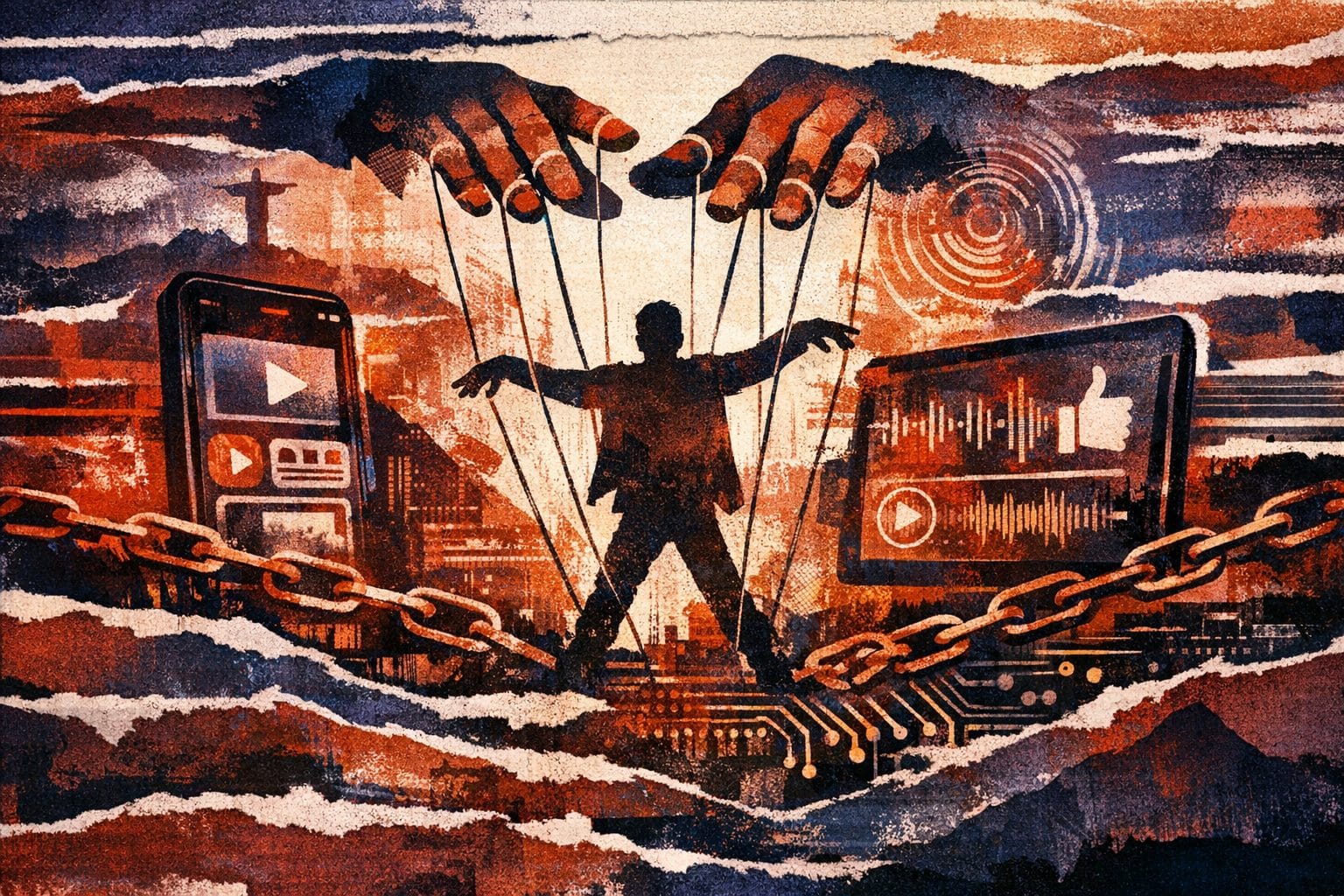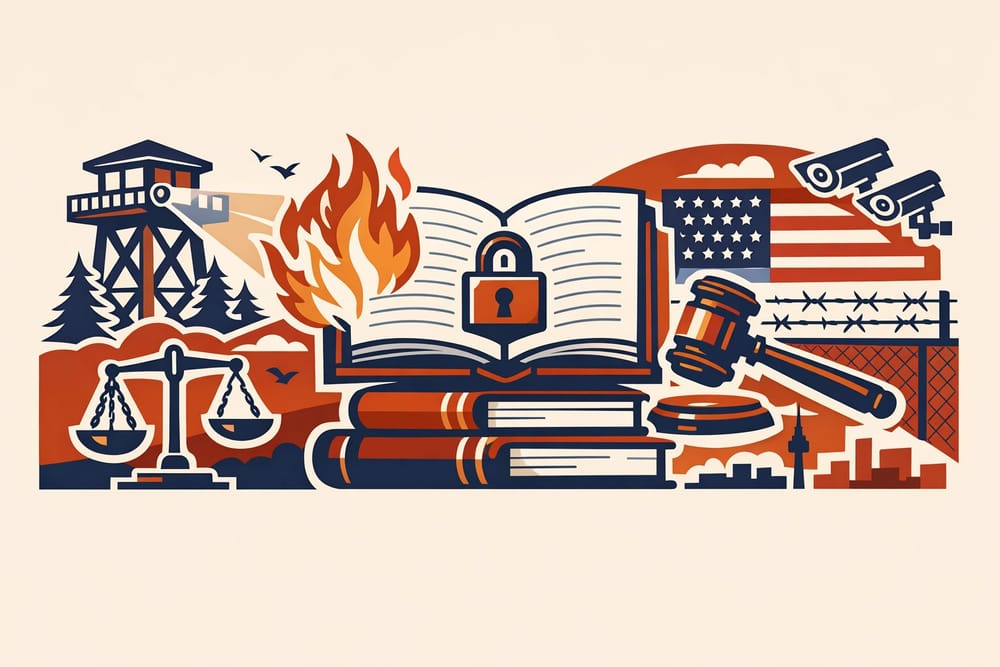
A book about freedom of publication released by MIT Press in hardcover and digital editions on August 12, 2025, with a paperback edition in 2026: the publishing choice carries something ironic. Adam Szetela selected one of the most institutionally respected houses in American academic publishing to document how digital campaigns are reconfiguring the right to publish, even within circles that claim to champion openness. His thesis is uncomfortable: the rules that broaden representation and those that protect public disagreement can, under certain conditions, turn against each other.
The essentials
- Szetela argues that digital campaigns over controversy structurally alter publishing conditions, even at publishing houses committed to diversity.
- The book, published by MIT Press in hardcover and digital editions on August 12, 2025, with a paperback edition in 2026, draws on interviews with publishing professionals and interdisciplinary analysis spanning sociology, law, moral philosophy, social psychology, political science, economics, and history.
- The central mechanism: concentrated digital pressure shifts editorial decision-making toward reputational risk management criteria.
- The main tension Szetela uncovers: including more voices and protecting freedom of disagreement are not always converging objectives.
- The book’s angle is one of clear-eyed optimism: broadening representation is genuine progress, but it can be weakened by the very tools meant to accelerate it.
A sociologist in the publishing chain
Adam Szetela did not come to this subject by chance. A sociologist by training and specialist in media and cultural inequality, he has devoted previous work to the conditions of production and distribution of ideas within American academic institutions. That Book Is Dangerous! extends this line by shifting focus toward trade and academic publishing, where the question of what deserves to be said, printed, and distributed is negotiated concretely.
The title comes from a phrase heard in industry corridors: what publishers say when a manuscript risks triggering a campaign before publication. Szetela has turned it into an assertion. Dangerous for whom, by what criteria, decided by whom, and at what speed.
The mechanics of digital moral panic
The book’s central thesis rests on an empirical observation: over the past decade, American publishing has experienced episodes of concentrated controversy around specific titles or authors, triggered on social media and capable of rapidly affecting editorial decisions, particularly through contract cancellations, title withdrawals, or staff changes. Szetela does not treat them as accidents. He sees in them a structural phenomenon to which he applies the concept of moral panic forged by British sociologist Stanley Cohen in the 1970s: a social reaction disproportionate to a perceived threat, amplified by media and institutions until it produces lasting effects on collective norms.
The book’s originality lies in showing that social media has altered the metabolism of these panics. Their speed is incomparable to that of analog media cycles. Their geography is one of concentration: a limited number of highly active accounts can suffice to create the impression of vox populi. Their preferred targets are often publishing houses whose stated policy is precisely inclusion, exposed to the reproach of betraying their own values.
Szetela names this mechanism: the pressure exerted by peers, readers, and employees via digital tools. The publishing chain tends to absorb this pressure upstream, at the manuscript acquisition stage, before controversy becomes public.
Diversity and disagreement: two projects that sit uneasily together
The analytically densest part of the book addresses the tension between two projects that progressive American publishing has often presented as naturally aligned. The first consists of broadening the representation of authors and perspectives: publishing more writers from racial, social, or gender minorities. The second consists of maintaining a space where ideas that disturb, that contradict consensus, or that question dominant frameworks can circulate freely.
Szetela shows that these two projects can enter into tension. Digital controversy campaigns can exploit the tensions between these two objectives. When a title is attacked in the name of protecting a community, the publisher faces an impossible equation: defending the book means exposing that community; abandoning the book closes the space for disagreement. Publishing houses that have made diversity a public commitment are doubly vulnerable, because they have provided the very moral criteria against which they will be judged.
Szetela defends diversity while signaling that adopting a single normative framework can create institutional fragility in an environment where other actors can instrumentalize it. He cites documented cases where authors belonging themselves to minorities have seen their books targeted by campaigns claiming to protect those same minorities. The geometry of these conflicts is rarely simple. The book review of The Culture Wars by Tim Dunlop describes a neighboring dynamic: culture wars advance less through frontal confrontation between camps than through the capture of intermediate institutions.
Algorithms and the publisher
One chapter analyzes the role of platforms in the production and amplification of publishing controversies. The recommendation systems of Twitter, Instagram, and TikTok use interaction signals among other visibility criteria, which can favor content that generates rapid reactions. Platforms coordinate no campaign, but they create the conditions under which certain types of mobilization obtain greater audience and visibility.
This analysis joins broader work on the economy of digital attention. Platforms decide formats in place of creators: the finding applies equally to editorial decisions, which progressively align with what digital environments make visible and what they make risky. Szetela shows that this logic affects actors differently according to their size. Small publishing houses, often the most innovative editorially, find themselves exposed to concentrated campaigns. Large groups have legal and communications teams capable of absorbing pressure.
The concentration of editorial decisions can affect the conditions for circulation of diverse voices.
The book’s blind spots
That Book Is Dangerous! is a solid book, but it has blind spots that Szetela himself partially acknowledges.
The first point for caution concerns measurement. The cases documented in the book are real and well-sourced, but the book lacks a systematic database to measure the phenomenon’s scope. The scale of titles cancelled under digital pressure and the extent of editorial decisions affected are not systematically measured. Szetela works more as a qualitative sociologist than as a media economist, and this limitation is acknowledged but real.
It weakens slightly the reach of the general conclusions.
The second blind spot is geographic. The book is entirely centered on English-language American publishing, which removes part of its comparative scope. The dynamics it describes exist in France, the United Kingdom, Germany, but in very different institutional configurations. French publishing, for instance, with its public funding structures and its ecosystem of independent bookstores, would offer a useful counterexample. The absence of this comparative perspective prevents distinguishing what belongs to a logic specific to digital platforms from what is specific to the American publishing model.
The third blind spot is political. Szetela documents campaigns coming principally from progressive circles against authors or titles in progressive spaces. The author presents this tendency as significant within his field of study. But the book would have benefited from examining with equal rigor equivalent campaigns coming from the American conservative right, which has long had its own mechanisms of pressure on school libraries and university curricula.
Reasons to read this book
That Book Is Dangerous! addresses three types of readers.
Publishing professionals first: the book offers them an analytical framework to name what they often experience without being able to formalize it. The decision not to acquire a manuscript in anticipation of reputational risk is difficult to document from within. Szetela makes it visible and places it within a larger dynamic.
Readers interested in intellectual freedoms and the conditions of public debate, next. The book brings precise arguments where debate is often dominated by positions of principle. Neither unconditional defense of freedom of expression as an abstract value, nor denunciation of every attempt to hold publishers accountable: Szetela remains within the analysis of mechanisms, and that is what gives it its strength.
Researchers in the sociology of media and cultural institutions, finally. The book participates in an academic conversation about the transformations of the publishing field in the digital age, and it makes an original contribution through its treatment of the concept of moral panic applied to a sector that largely thought itself immune to this type of pressure.
The question it leaves open is this: how to build inclusion policies whose legitimacy does not depend on the mood of social networks. Szetela does not propose an answer, and this restraint is justified. The book poses the problem with enough clarity that others can work toward the answer.
Bibliographic information
That Book Is Dangerous!: How Moral Panic, Social Media, and the Culture Wars Are Remaking Publishing Adam Szetela MIT Press, 2026 Published: June 9, 2026
Sources
- MIT Press Bookstore, That Book Is Dangerous!, https://mitpressbookstore.mit.edu/book/9780262057325
- National Endowment for the Arts, Measuring the Arts: Earnings for Artists and Other Cultural Workers, 2025 (no URL: institutional document not verified)
- Stanley Cohen, Folk Devils and Moral Panics, 1972 (foundational academic reference for the concept used by Szetela)