All articles

AI Creates Free Time in South Korea
More than half of South Korean workers use generative artificial intelligence at the office. The result? They gain nearly 4% of their work time, but this efficiency translates to neither more production nor higher income. AI produces free time, not growth. - 51.8% of South Korean workers use generat

Telemedicine Disrupts Research and Clinical Trials
The decentralized clinical trials market will explode from 9.4 billion dollars in 2025 to 38.2 billion in 2034. This growth of more than 300% in less than a decade reveals a major transformation in medical research: the ability to include patients from around the world without them leaving their hom

Can Urban Geothermal Energy Break Urban Heat Domes
Urban air conditioning now consumes more electricity than heating in half of the world's major metropolitan areas. Facing this energy shift and the intensification of heat domes that trap cities in bubbles of extreme temperatures, private investors are betting heavily on centralized geothermal distr
When the Earth Becomes Transparent and Reveals Its Treasures
A technology using particles from space is now mapping the subsurface with exceptional precision. Ideon Technologies has demonstrated that just four boreholes are sufficient to image geological structures up to 600 meters deep over 2 km², whereas traditional exploration would require dozens of wells

Artificial Intelligence Is Already Programming Tomorrow's Creative Ownership
The automation of intellectual property is no longer a futuristic fantasy. Thanks to smart contracts, blockchain enables automated and transparent management of licenses for the use of protected works and ensures the automatic distribution of royalties to creators as soon as their work is downloaded

Remote Work Worsens Youth Unemployment in the United States
64% of the increase in unemployment among young American college graduates is explained by the rise of remote work according to a study by the New York Fed. This figure reveals a little-known paradox: the professional flexibility that was supposed to democratize access to work massively penalizes ne
Researchers Set 150 Years as Biological Limit and Contest Their Own Data
Seventy thousand participants analyzed, fifteen international studies compiled, and a conclusion that divides: 150 years would constitute the absolute biological ceiling of human life. This limit, established by a team at the Roswell Park Institute in Buffalo and published in Nature Communications,

Europe Accumulates €5.88 Billion in GDPR Fines Without Resolving the Consent Fiction
€1.2 billion. That is the amount of GDPR fines imposed in 2024 by European data protection authorities, bringing the total cumulative amount to €5.88 billion since the regulation came into force in 2018. Yet this repressive inflation masks a deeper paradox: Europe is relentlessly pursuing a consent

When the Digital Revolution Produces Its First Failed Generation
For the first time in more than a century, an entire generation is reversing the historical trend of cognitive improvement. Generation Z (born approximately 1997-2012) obtains lower scores than its parents (the Millennials) on numerous standardized tests. This unprecedented regression particularly a

'Keynes for Our Times' by Robert Skidelsky — Economics as a Moral Science, Keynesian Rehabilitation Against Austerity
Economics is not an exact science. This assertion, which makes Wall Street modelers cringe, nonetheless runs through three centuries of economic thought — from French physiocrats to John Maynard Keynes. In "Keynes for Our Times," Robert Skidelsky, the definitive biographer of the British economist,
When Automated Moderation Transforms Regulation Into Mass Censorship
82% false positives. That is the maximum error rate committed by artificial intelligence systems moderating digital platforms when attempting to identify illegal content, according to an Oxford University study published in 2024. In the best cases, these algorithms still make mistakes 58% of the tim

AI Widens the North-South Gap Before Delivering on Promises in Rich Countries
Low-income countries capture only 15% of the productivity gains generated by artificial intelligence, compared to 70% for wealthy countries, according to an OECD report published in November 2024. This imbalanced distribution occurs even as AI has yet to generate the massive productivity gains promi

61% of World's Population Judges Its Institutions Unjust
Sixty-one percent of the global population develops a moderate to high sense of injustice toward its public and private institutions according to the Edelman Trust Barometer 2025. This distrust affects both consolidated democracies and authoritarian regimes, revealing a legitimacy crisis that transc
Schools Divided Between Digital Emancipation and Diploma Factories
Singapore pushes three-quarters of its teachers toward artificial intelligence. France lags at 14%. Between these two extremes, global education is shifting toward a societal choice that will determine whether AI liberates pedagogy or industrializes it. The 41% of OECD teachers already using AI in 2

From Marine Desert to Floating Mines: Solar Desalination Transmutes Salt into Gold
95 million m³ of desalted water flow out of global factories every day. But 150 million m³ of hypersaline brine return to the oceans, creating dead zones that stretch across thousands of square kilometers. This major ecological imbalance is now finding its first industrial solutions thanks to breakt

New York Abandons Promised Equity and Embraces Congestion Pricing
550 million dollars. That is the amount that New York's congestion pricing generated in net revenues during its first year of implementation in 2025. This pioneering U.S. experiment reveals a double lesson: the health and economic effectiveness of urban tolls is no longer debated, but its social acc

Europe Discovers the Trap of Its Climate Transition After Ten Years of the Green Deal
406 billion euros per year. This is the climate investment deficit that the European Union must fill to reach its 2030 objectives, according to the Institute for Climate Economics. A sum equivalent to Belgium's GDP, which reveals the scale of the financial challenge behind European climate ambitions
Global Electrification Faces a Shortage of Electricians
More than 60% of the 700 energy companies surveyed by the International Energy Agency in 2025 face critical bottlenecks in recruitment. This shortage of skilled workers is now slowing the massive electrification necessary for the energy transition and the development of artificial intelligence. The

The Collapse of European Pollinators Would Cost 24 Billion Euros Per Year in Lost Well-Being
A complete collapse of wild pollinators in Europe by 2030 would cause 34 billion euros in annual well-being losses globally. Europe would bear 24 billion of this bill, of which 12 billion for the European Union alone. These figures, published in Nature Communications, quantify for the first time the
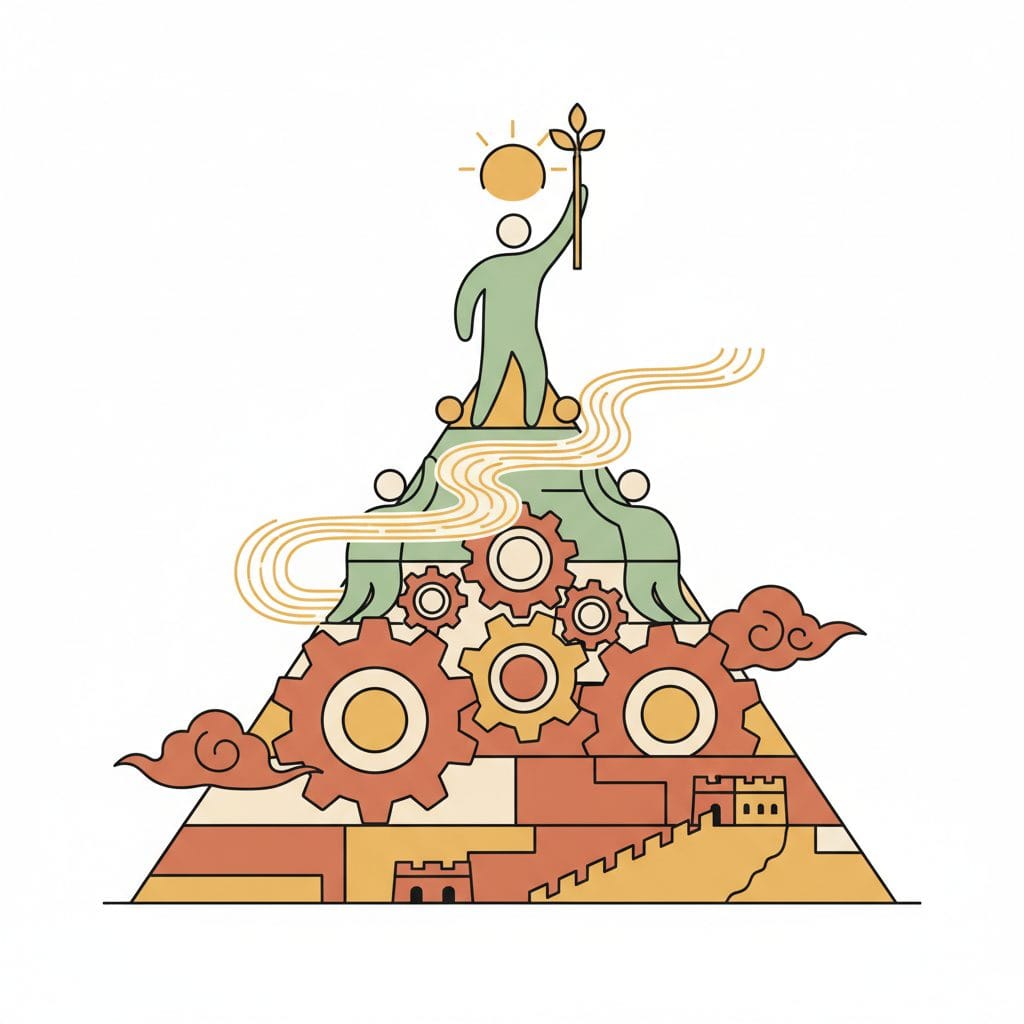
China Raises Retirement Age and Bets on a Silver Economy Worth 7 Trillion Yuan
For the first time since 1950, China is raising the retirement age. Men will have to work until 63 instead of 60, female executives until 58 instead of 55, female workers until 55 instead of 50. This far-reaching reform comes with an industrial gamble: transforming the aging of its 290 million senio

When 90,000 Officers Are Missing While Ports Automate, Does Maritime Show What Industries Will Become
Automated ports handle between 10 and 35% more containers while reducing labor costs by 25 to 55%. Yet this performance masks a major contradiction: while robotized terminals multiply in Asia and Europe, the global maritime industry faces a projected deficit of 89,510 officers by 2026. The robotic r

The Five-Year Window Separating Twentieth-Century Audiovisual Memory from Oblivion
The magnetic media of the past century is entering its final phase. The VHS, U-matic, and Betacam formats—which contain millions of hours of documentaries, television broadcasts, and family recordings—now have a critical window of 5 to 10 years before irreversible degradation. This silent deadline t
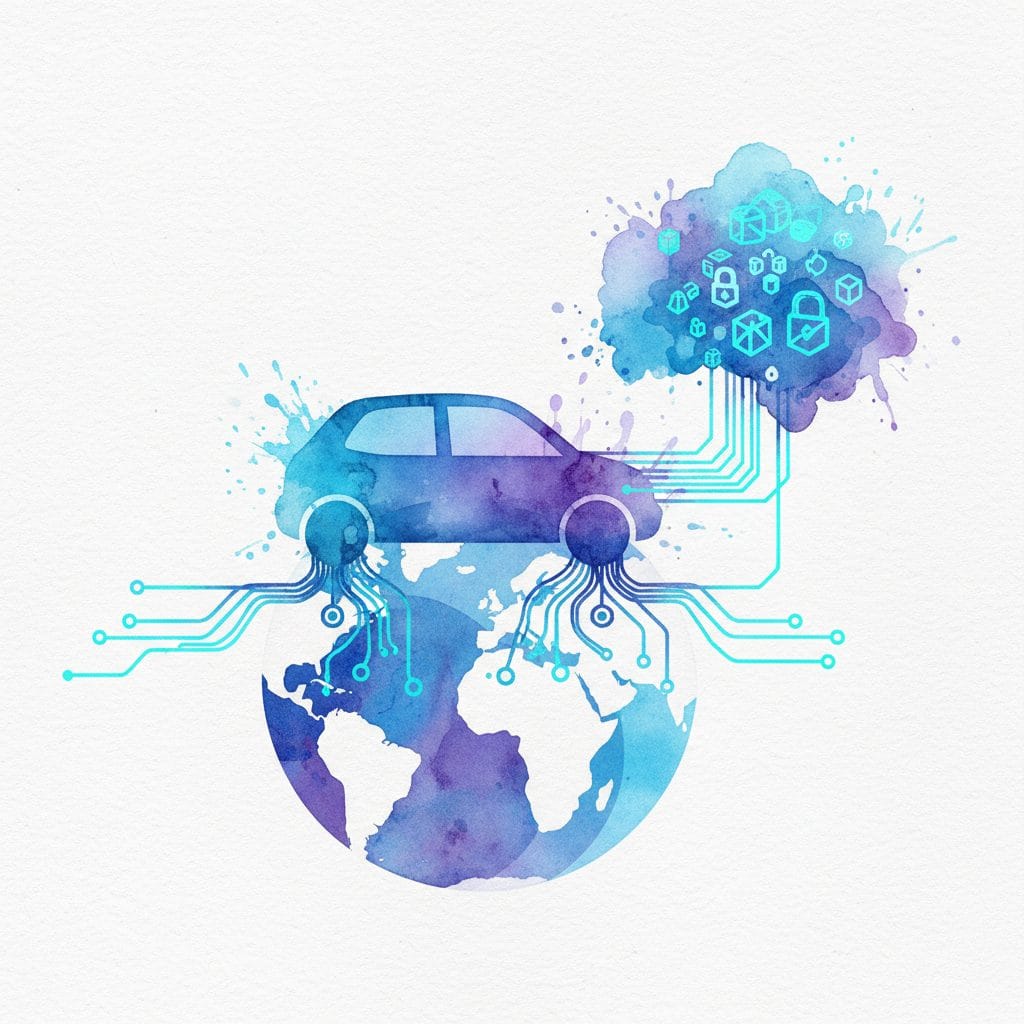
When Connected Cars Erase Property Rights
4.663 trillion dollars. That's the size the global software-defined vehicle market will reach in 2035, compared to 278 billion today. This multiplication by 17 in ten years reflects far more than the rise of a technology: it consecrates a legal revolution that redefines what it means to own an objec

White Hydrogen Shakes the European Industry: Lorraine Contains a Treasure Exceeding All Continental Investments
46 million tons of natural hydrogen beneath Moselle. This reserve discovered by the GeoRessources laboratory exceeds European needs for 2030 by a factor of two, just as Brussels has committed 9 billion euros to develop synthetic hydrogen. With extraction costs of 0.5 euros per kilogram and industria