All articles
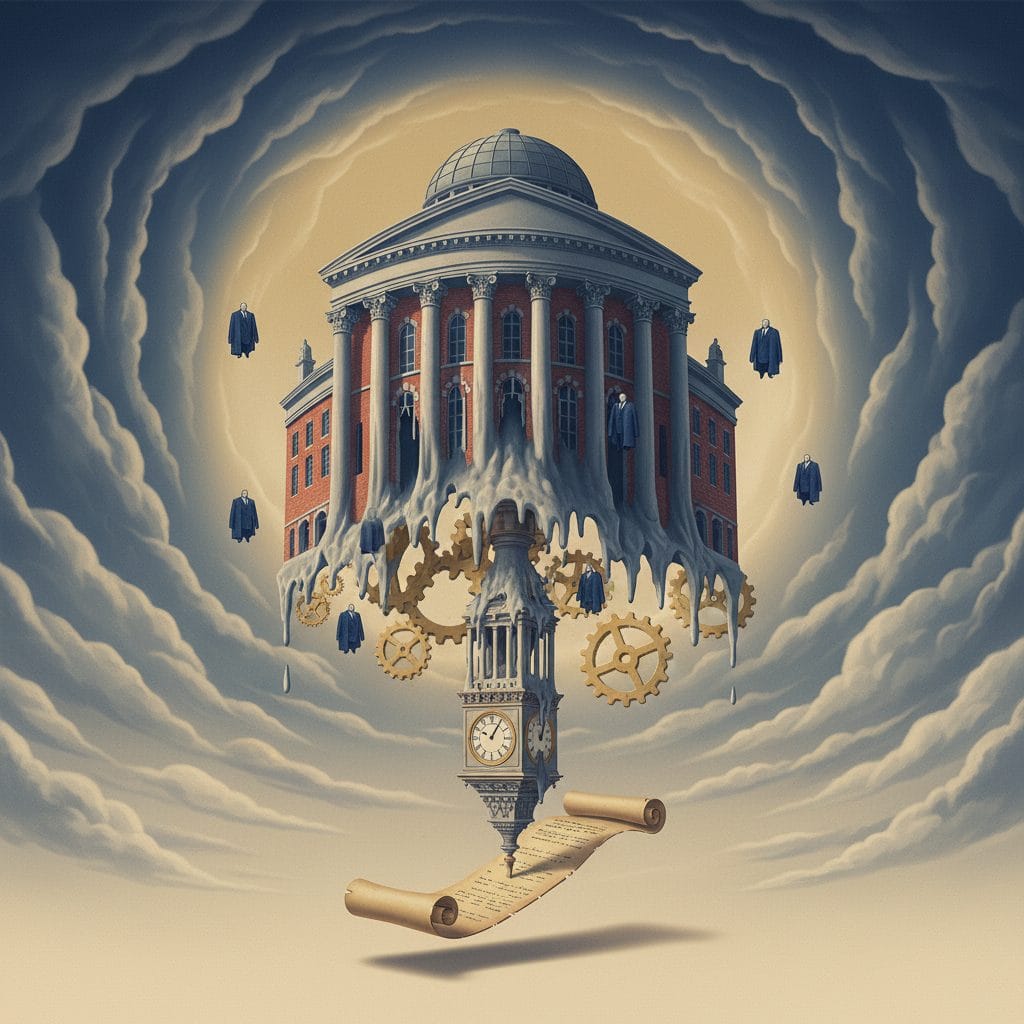
In Europe, Executives Govern Without Their Parliaments
Only 20% of French people still trust their National Assembly, a historically low score that crystallizes a troubling European trend. For the first time since 2009, distrust of parliamentary institutions has reached levels never before observed in stable democracies. This erosion of parliamentary le

How Far Will Active Longevity Push Retirement to Age 80?
Retirement age is changing centuries. In the United States, 51% of working-age retirees plan to work indefinitely according to the Employee Benefit Research Institute's annual survey. In Japan, 11.4% of those over 75 still hold jobs, a world record. This silent revolution is transforming the global

Humanity Is Getting Used to AI Without Measuring What It's Unlearning
54.6% of Americans use AI regularly in their daily lives, according to the Federal Reserve Bank of St. Louis. A figure that has grown by 22% in less than a year. But this massive adoption hides a troubling reality: humanity is experiencing large-scale cognitive dependence on AI without understanding
Artificial Intelligence Under Fire From Economic Suspicions
Seven trillion six hundred billion dollars. That is the colossal amount that technology companies plan to invest in artificial intelligence infrastructure between 2026 and 2031, according to Goldman Sachs. A figure that exceeds the combined GDP of Japan and Germany. But the investment bank is beginn
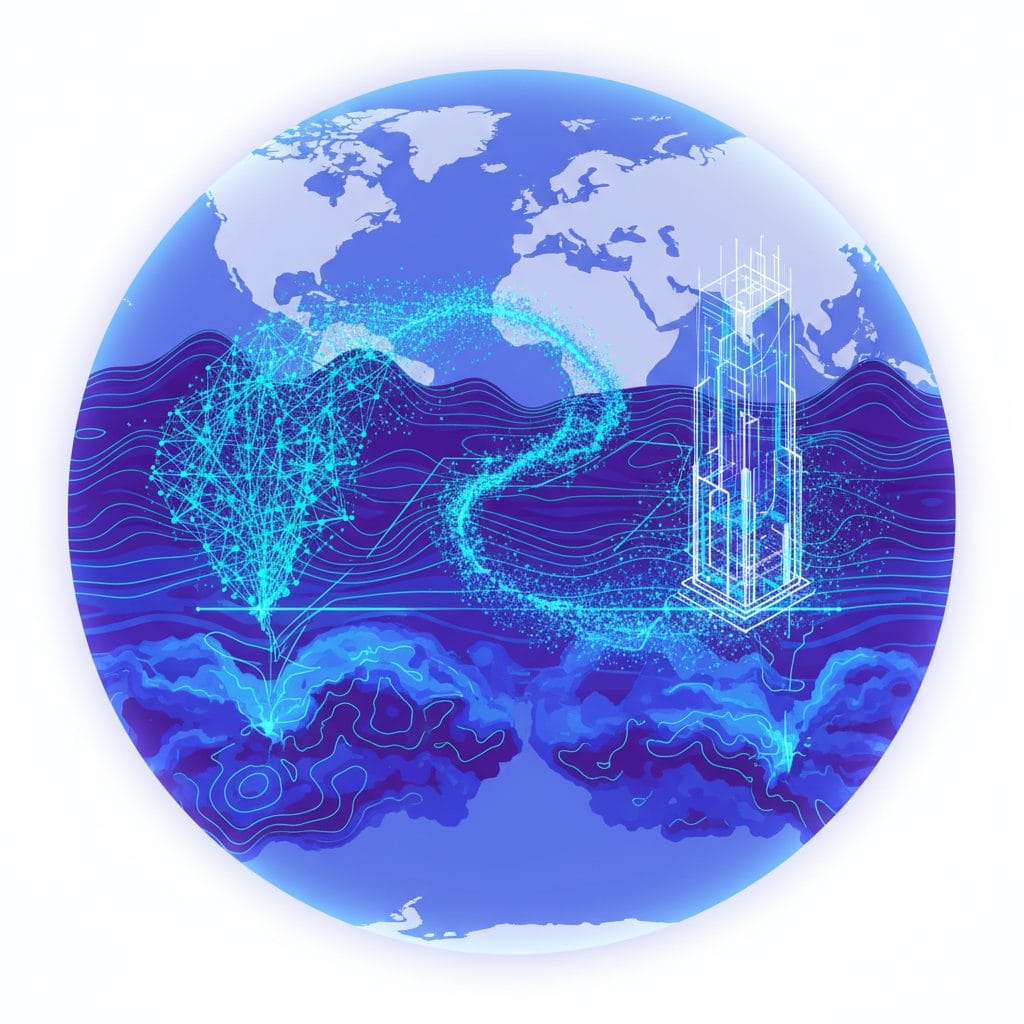
AI and Agriculture Fight Over the Planet's Fresh Water
While agriculture seeks to feed 8 billion humans with dwindling water resources, artificial intelligence has emerged as an unexpected competitor for access to fresh water. This collision between two vital sectors is reshaping local priorities. Agriculture monopolizes 70% of the world's fresh water,

Europe Bets 20 Billion on Five AI Gigafactories Against 320 Billion American Investment
Europe is preparing to deploy considerable investments to build artificial intelligence gigafactories. Facing it, American giants have invested massive sums, creating an asymmetry that reveals the scale of Europe's challenge: catching up on an abyssal technological lag while preserving digital sover
Soils Shelter 99% of Living Things and Agricultural Policy Ignores Them
More than 99% of living species thrive beneath our feet, in the first few centimeters of soil. This revelation overturns everything we thought we knew about biodiversity: while debates focus on tropical forests and oceans, the bulk of life swarms in an invisible compartment that industrial agricultu

Early Data Settles the Question: AI Reconfigures Employment Without Destroying It
Artificial intelligence increases productivity by 4% in European companies that adopt it and pushes their wages upward, without net job destruction in the short term. In the United States, 750 executives surveyed by the Atlanta Federal Reserve confirm this trend: widespread productivity gains, few l

American Courts Grant AI Giants the Right to Read Without Paying
Federal judges have ruled: copying books to feed a language model falls under fair use, that exception which allows using a protected work without authorization for "transformative" use. This decision reshuffles the cards of the global creative economy just as Europe is heading in the opposite direc

Scandinavia Abandons the Tablet and Reopens the Textbook
Nearly one European in two no longer reads books. In Scandinavia, this shift is concerning enough that Sweden, Denmark, and Finland are massively abandoning the digital schooling they pioneered. These countries are reinvesting in printed textbooks after a decade of technological experimentation. Sch

Book Review: I Am Not a Robot by Joanna Stern. Life Under Algorithmic Assistance
Joanna Stern is one of America's most-watched tech journalists. She spent a year letting AI manage most of her existence. What she reported from this journey reads less like a manifesto than a transcript of disarming honesty. Joanna Stern is a tech columnist at the Wall Street Journal, Emmy Award-

Predictive Maintenance Will Reach $70 Billion by 2032
By 2032, global companies will spend $70.73 billion to maintain their machines — three times more than today. But this explosion in predictive maintenance is not a cost. It is an investment that unlocks $50 billion annually in avoided production downtime and frees up hundreds of billions in working

Insurance Saved by Markets' Appetite for Catastrophes
In 2024, investors wagered $50 billion on catastrophe bonds, financial securities that bet on the absence of major earthquakes, hurricanes, or floods. This sum, growing 7% year-on-year, illustrates a paradox: while traditional insurers flee climate-risk zones, financial markets are discovering that

When Shoes Run Faster Than Legs
On October 12, 2019, Eliud Kipchoge breaks the mythical two-hour marathon barrier in 1h59'40''. On the Kenyan's feet: shoes with a carbon plate that improve running economy by 4 to 6%, saving two to three minutes over 42 kilometers. Since that date, all official and unofficial world records have bee

AI Creates Free Time in South Korea
More than half of South Korean workers use generative artificial intelligence at the office. The result? They gain nearly 4% of their work time, but this efficiency translates to neither more production nor higher income. AI produces free time, not growth. - 51.8% of South Korean workers use generat

Telemedicine Disrupts Research and Clinical Trials
The decentralized clinical trials market will explode from 9.4 billion dollars in 2025 to 38.2 billion in 2034. This growth of more than 300% in less than a decade reveals a major transformation in medical research: the ability to include patients from around the world without them leaving their hom

Can Urban Geothermal Energy Break Urban Heat Domes
Urban air conditioning now consumes more electricity than heating in half of the world's major metropolitan areas. Facing this energy shift and the intensification of heat domes that trap cities in bubbles of extreme temperatures, private investors are betting heavily on centralized geothermal distr
When the Earth Becomes Transparent and Reveals Its Treasures
A technology using particles from space is now mapping the subsurface with exceptional precision. Ideon Technologies has demonstrated that just four boreholes are sufficient to image geological structures up to 600 meters deep over 2 km², whereas traditional exploration would require dozens of wells
Artificial Intelligence Is Already Programming Tomorrow's Creative Ownership
The automation of intellectual property is no longer a futuristic fantasy. Thanks to smart contracts, blockchain enables automated and transparent management of licenses for the use of protected works and ensures the automatic distribution of royalties to creators as soon as their work is downloaded
Remote Work Worsens Youth Unemployment in the United States
64% of the increase in unemployment among young American college graduates is explained by the rise of remote work according to a study by the New York Fed. This figure reveals a little-known paradox: the professional flexibility that was supposed to democratize access to work massively penalizes ne
Researchers Set 150 Years as Biological Limit and Contest Their Own Data
Seventy thousand participants analyzed, fifteen international studies compiled, and a conclusion that divides: 150 years would constitute the absolute biological ceiling of human life. This limit, established by a team at the Roswell Park Institute in Buffalo and published in Nature Communications,

Europe Accumulates €5.88 Billion in GDPR Fines Without Resolving the Consent Fiction
€1.2 billion. That is the amount of GDPR fines imposed in 2024 by European data protection authorities, bringing the total cumulative amount to €5.88 billion since the regulation came into force in 2018. Yet this repressive inflation masks a deeper paradox: Europe is relentlessly pursuing a consent

When the Digital Revolution Produces Its First Failed Generation
For the first time in more than a century, an entire generation is reversing the historical trend of cognitive improvement. Generation Z (born approximately 1997-2012) obtains lower scores than its parents (the Millennials) on numerous standardized tests. This unprecedented regression particularly a

'Keynes for Our Times' by Robert Skidelsky — Economics as a Moral Science, Keynesian Rehabilitation Against Austerity
Economics is not an exact science. This assertion, which makes Wall Street modelers cringe, nonetheless runs through three centuries of economic thought — from French physiocrats to John Maynard Keynes. In "Keynes for Our Times," Robert Skidelsky, the definitive biographer of the British economist,