All articles
Global Capital Increases, Development Financing Stalls
Between 2015 and 2022, global resources dedicated to development increased by 22 percent, but needs grew by 36 percent, according to the OECD. The annual gap reached 4 trillion dollars in 2022 and could exceed 6.4 trillion by 2030, according to the organization's projections. Global capital is abund

One in Eight French Workers Face the Challenge of Agentic AI
Technology does not destroy professions in bulk. It dismantles positions task by task. This is the most counterintuitive finding of recent work on automation: a significant share of French workers currently occupy positions where a substantial proportion of their tasks are completely automatable by
Global Venture Capital Bets on 263 Champions and Forgets the Rest
In the first half of 2026, 263 mega-funding rounds exceeding $100 million captured 81% of global venture capital. The remaining 19% (approximately $51 billion in the United States) was distributed among a limited number of deals, with global deal count reaching a ten-year low according to CB Insight

French Marine Protected Areas: Between Ambition and Ghost Surveillance
France officially protects 33% of its waters. Strictly protected: 1.6%. The gap between these two figures says everything you need to know about the true state of global marine conservation. In 2026, the French government is preparing to raise its objective for marine protected areas, following the
In France, Seniors Leave the Labor Market Before the Law Requires Them To
French companies are pushing out their oldest employees well before the state authorizes it. At age 60, the employment rate remains significant, but from 61-62 years old onward, half of French workers are no longer employed. At 62, this rate collapses to a minority of the active population. The 2023

Work Pays Half of Taxes, the Capital that Replaces It Almost Nothing
In OECD countries, income tax and social contributions represent nearly half of total tax revenues. The technology that replaces these workers pays a light tax burden, sometimes even receives subsidies. This imbalance is not new. But the acceleration of automation gives it an unprecedented dimension
France Measures Who Pays for Whom, Generation by Generation
In 2021, France had approximately 39 people aged 65 or older for every 100 working-age people aged 20 to 64. According to INSEE projections from 2021, this ratio could reach between 46 and 70 by 2070 depending on the assumptions retained, with 57 as the central scenario — the 2026 projections revise

Book Review — Measuring Progress with 1940s Tools: Diane Coyle's Diagnosis
GDP, in its original conception, was developed in the 1930s to address the Great Depression. Its standardized form, used to plan the war effort, emerged in the early 1940s. Simon Kuznets, the economist who laid its foundations, himself warned against using this indicator as a measure of national wel

European Fragmentation: An Unexpected Strength From a Thousand Years of Economic History
Europe has never managed to establish a single technological sovereign. For five centuries, its states competed with each other, copied their neighbors, and welcomed the exiles of some and the inventions of others. This institutional disorder produced the Industrial Revolution, modern chemistry, qua

The Closure of Hormuz Drove Up Prices Without Triggering Feared Stagflation
Within a few days of the Strait of Hormuz's closure in 2026, approximately 20 million barrels per day normally transited through this passage, but the volume actually interrupted was estimated at 11–14 million barrels per day — the closure being partial and selective, with partial alternatives exist

The French Love Science and Doubt Those Who Practice It
Six out of ten French people declare themselves interested in science. Fewer than one in two judge the scientific community to be independent. These two figures, drawn from the Universcience and Viavoice 2026 critical thinking barometer, do not contradict each other. They sketch a decoupling that pu

AI Agents Produce Scientific Results in Hours, Researcher Becomes Supervisor
In October 2024, the Nobel Committee awarded Demis Hassabis and John Jumper the prize for AlphaFold, DeepMind's program that predicts the three-dimensional structure of proteins. In 50 years of structural biology, the scientific community had solved approximately 200,000 structures. AlphaFold predic

One Billion Proteins in Open Access: The Bet of Open Science Against Proprietary Medicine
The Chan Zuckerberg Biohub published, at the end of May 2026, an atlas of more than one billion protein structures generated by the ESMFold2 model. Free. Downloadable. Without usage restrictions. It is the largest structural biology database ever made freely available, and it arrives at the precise

Book Review — "The Invisible Institutions" by Pierre Rosanvallon: The Unwritten Pillars of Democracy
Constitutions describe the rules of the game. They establish rights, organize powers, and provide remedies. But they say nothing about what makes these rules acceptable — the trust that citizens place in institutions, the legitimacy that distinguishes an accepted decision from a mere exercise of for
Half of the French Are No Longer Proud of Their Democracy
In 2026, 51% of French people believe there is nothing to be proud of in their democratic system. This is the figure from the CEVIPOF annual barometer, and it deserves careful attention. Not because it signals an imminent collapse, but because it says something precise about the nature of democratic

Value Sharing Remains Window Dressing for Many SMEs
Three years after the agreement that was supposed to generalize profit-sharing in all French small businesses, the CFDT qualifies the outcome as "globally catastrophic." This verdict does not invalidate the ambition of the 2023 national inter-professional agreement, but it says something essential a
AI Writes for Us and the Brain Goes on Standby
Measuring the brain activity of someone writing with the help of AI and someone writing alone produces results that should be troubling far beyond neuroscience. The study conducted in 2025 by Nataliya Kosmyna and her colleagues at the MIT Media Lab shows that regular users of AI writing assistants d

Germany Drills Its Coal Wastelands While France Lets 100 TWh Sleep
France is the second-largest producer of deep geothermal heat in the EU. It exploits less than 1% of it. Meanwhile, Germany—a country specialists readily describe as a latecomer in this field—is currently drilling beneath its abandoned coal basins. The Fraunhofer IEG institute recently published the

France Has Europe's Largest River Network and Does Almost Nothing With It
France possesses 8,500 kilometers of navigable waterways, the most extensive river network in Europe. On this network, freight represents only 2.4% of ton-kilometers transported. In the Netherlands, this figure reaches 43%. The gap is not geographical. It is not technical. It is political. - The mod

In the Depths of Clarion-Clipperton, the Riches of an Engulfed Continent
A study published in 2026 has just described 24 new species of amphipods in the abyssal plain of Clarion-Clipperton, as well as an entirely unknown superfamily to science, christened Mirabestioidea. Before this work, only a few species had been recorded in this zone. The known number has thus incr
Microsoft and Amazon Bind the Best AI Labs to Their Clouds Without Buying Them
Ten billion dollars. That's what Microsoft has injected into OpenAI since 2019. Amazon followed with four billion into Anthropic. These figures do not describe buyouts, nor even classical equity stakes. The FTC has documented something more subtle: these investments come with contractual obligations
Washington Advances Post-Quantum Cryptography Migration to 2030
The encryption that today protects medical records, government communications, and banking transactions relies on a mathematical problem that no computer can solve in reasonable time. This will change. The question is no longer if, but when. On June 22, 2026, President Trump signed Executive Order 1
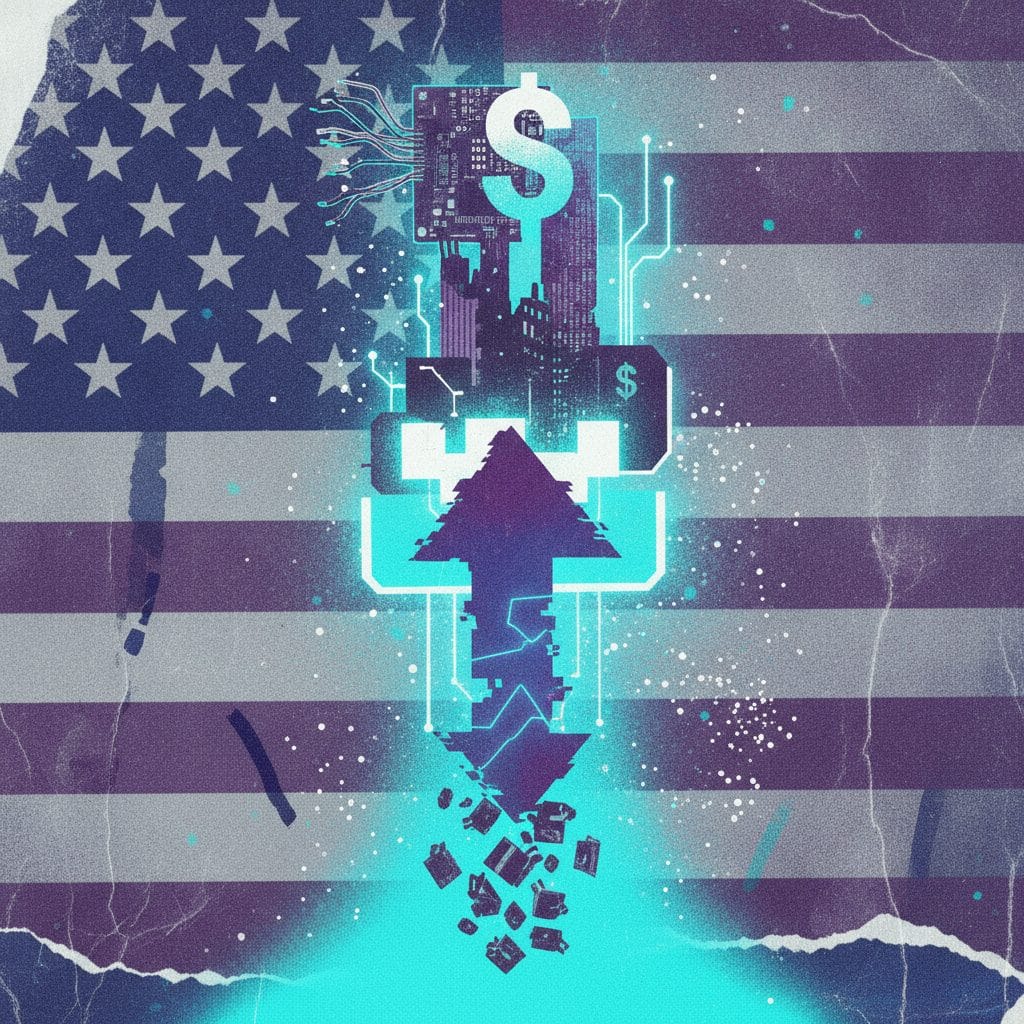
American Tech Cuts Juniors and Pays Seniors More and More
Employment of developers aged 22 to 25 has declined by approximately 20% since 2024, according to the Stanford AI Index 2026. Not because of a recession. Not because of a trade war. Because of a deliberate recruitment choice that dozens of tech companies have made quietly, often without measuring th
The Biological Passport Catches Less Than 5% of Dopers
High-level sport accepts, in silence, a failure rate that would be intolerable in any other control domain: its primary doping detection tool lets between 95 and 98 dopers out of 100 slip through. This is not an activist estimate. It is the conclusion of a collective expert assessment by Inserm publ