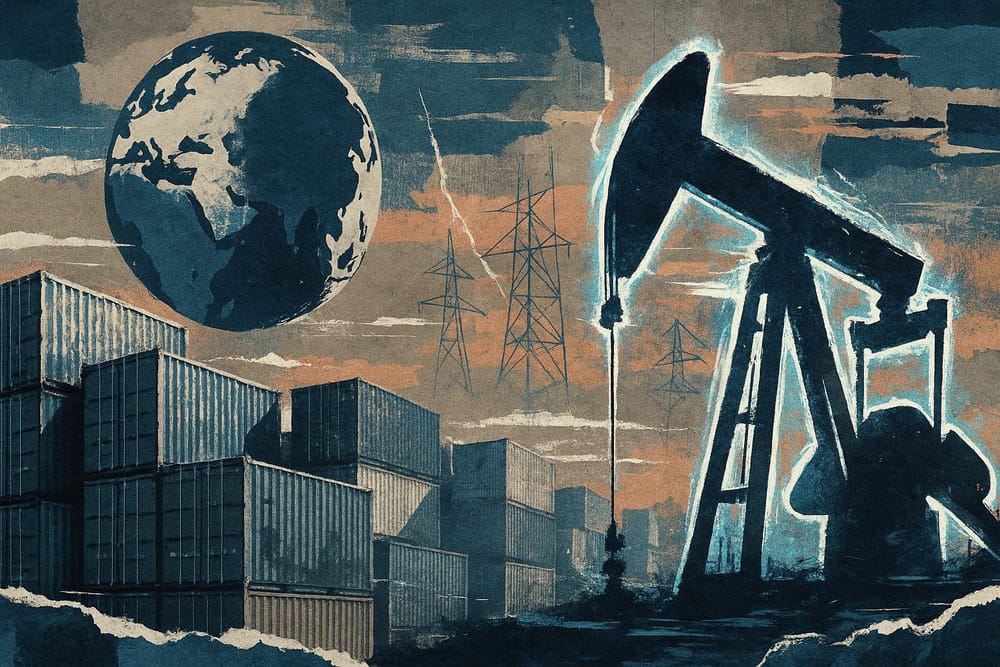
Supply chain disruptions linked to geopolitical tensions can affect energy costs in regional production hubs. Thailand, Vietnam, and Indonesia have spent a decade building logistics infrastructure capable of capturing the diversification of global supply chains away from China. Their industrial energy transits through geopolitically exposed routes, and this vulnerability weakens part of the logistics advantages accumulated.
The Essentials
- ASEAN ranks among the principal beneficiaries of supply chain diversification away from China.
- Dependence on hydrocarbon imports via the Strait of Hormuz and the Strait of Malacca exposes the region’s manufacturing to direct geopolitical disruptions.
- A regional energy crisis can affect the stability of logistics chains, as geopolitical tensions in 2026 demonstrated.
- Investment programs in renewables are underway in Thailand, Vietnam, and Indonesia, but their scaling remains insufficient to cover industrial demand in the short term.
- Energy and industrial resilience by 2030-2035 will depend on a set of measures reducing exposure to imports and concentrated routes.
The Decade That Changed Everything for Regional Logistics
The movement began well before the U.S.-China trade war. But it was the tariff escalation of 2018-2019, followed by successive pandemic shocks, that convinced supply chain executives at major Western corporations that excessive concentration on China was structurally risky. ASEAN ranked among the principal beneficiaries.
Vietnam attracted massive investments in electronics and textiles. Samsung today produces a significant share of its smartphones there. Thailand consolidated its position in automotive and electrical equipment. Indonesia, more gradually, developed its free trade zones and modernized its ports to capture transformed raw material flows. ASEAN ranks among the dynamic zones for deploying new manufacturing capacity for companies seeking to diversify away from China.
This attractiveness rests on solid fundamentals: skilled and competitive labor, continuous improvement in port and road infrastructure, regional trade agreements, and preferential access to American and European markets. The Port of Laem Chabang in Thailand, Tanjung Priok in Indonesia, and the Ho Chi Minh City port complex rank among the most active logistics nodes in the Indo-Pacific region.
But this rise in power was built on an implicit assumption: that energy would be available, affordable, and predictable. It is this assumption that 2026 began to test.
Two Straits to Power an Entire Industry
The energy vulnerability of manufacturing ASEAN hinges on simple geography. Vietnam, Thailand, and Indonesia consume growing volumes of hydrocarbons to power their factories. A substantial portion of this oil and gas originates from the Persian Gulf and transits through the Strait of Hormuz, then through the Strait of Malacca, before reaching regional terminals.
These two straits accumulate different but complementary risks. Hormuz remains subject to tensions between Iran and Western powers, with recurrent episodes of threats to navigation. Malacca, a mandatory passage point for a massive share of global maritime trade, is narrow, congested, and structurally difficult to secure against disruptions, whether military, piracy, or navigation accidents.
The concentration of energy traffic at these two chokepoints creates an inverted leverage effect: a localized geopolitical shock can trigger a price spike or supply disruption that immediately reverberates on industrial production costs thousands of kilometers away. This is precisely the mechanism that can trigger during Middle Eastern tensions, affecting transport costs and energy prices in the region.
Indonesia presents a slightly different profile: as a producer of oil and coal, it benefits from a degree of energy self-sufficiency. But its internal production and distribution structure remains fragmented, and its export industries depend on imported fossil fuel energy for higher value-added segments. Geographic diversification of supply sources is insufficient to compensate for the absence of strategic storage infrastructure and flexibility in the industrial energy mix.
March 2026: When a Middle East Crisis Stops Factories in Vietnam
The Shijin Fashion episode of March 2026 deserves close examination, because it illustrates the transmission mechanism of a geopolitical shock to a concrete logistics chain disruption.
Shijin Apparel presents itself as a Chinese manufacturer serving international brands. Regional energy disruptions can affect production chains and delivery schedules for suppliers located in Southeast Asia.
What makes this issue interesting goes beyond individual cases. The strategy of diversifying away from China may be technically sound, but it exposes companies to regional energy dependence that merits careful evaluation.
The Kearney/CSCMP State of Logistics Report 2026 cites energy volatility as a macroeconomic force; companies relocating production to Southeast Asia must carefully assess the energy risk of their sites. They have resolved the Chinese geopolitical risk by exposing themselves to a geopolitical risk of a different nature.
This pattern also concerns digital supply chains: the increasing robotization of production lines in these hubs makes factories even more energy-intensive and thus more vulnerable to shocks in industrial electricity prices.
Government Strategies
The energy dependence of Southeast Asian logistics hubs is well known. It is the subject of real policy responses, even if their scale remains insufficient relative to the urgency.
Vietnam adopted its Energy Development Plan VIII, which provides for significant scaling up of renewable energy, particularly offshore wind whose Vietnamese coasts offer potential among Asia’s best. The country aims for a substantial renewable share in its energy mix by 2030. Offshore wind projects are in development with European and Asian partners, though regulatory frameworks and pricing mechanisms have delayed grid connections.
Thailand launched a revision of its Energy Development Master Plan with increased renewable targets. The government simultaneously pushes electrification of the automotive sector, creating dual pressure on the electrical grid but also incentivizing it to secure decarbonized and domestic energy sources.
Indonesia possesses exceptional geothermal potential: with 40% of the world’s geothermal reserves, it could theoretically power a significant share of its industry with stable, local energy not exposed to maritime disruptions. Pertamina Geothermal Energy, a publicly listed state enterprise since 2023, supports several development projects. But the pace of deployment remains slow relative to the growing needs of rapidly expanding industry.
At the regional level, the ASEAN Power Grid, a project for electrical interconnection among member countries, advances by stages. Bilateral links already exist between Thailand, Laos, and Malaysia. The challenge is to build a regional electricity market enabling mutualization of renewable resources and reducing individual country exposure to shocks on imported hydrocarbons. This undertaking belongs to the next decade. The comparison with Africa is instructive: large developing regions building regional trade infrastructure systematically discover that energy is the determining link in whether these infrastructures hold.
The Logistics Advantage Has a Condition of Validity
The argument advanced by companies and governments to justify diversification toward ASEAN rests on a risk calculation. Dependence on China presents tariff, geopolitical, and concentration risks. Diversification reduces these risks. The reasoning is sound, but it applies to a system, not to each country individually.
Vietnam, Thailand, and Indonesia have each reduced geographic concentration risk for their customers. But productive diversification can coexist with increased energy vulnerability; it does not necessarily replace it. Both can coexist in a diversified supplier portfolio. But for companies that concentrated their new capacity in just one of these countries, the situation resembles what they were fleeing.
Supply chain resilience depends on several factors: supplier redundancy, inventory management, contract flexibility, and audit of site energy risk. This last point ranks among underestimated parameters in the post-pandemic diversification decade.
Awareness is growing. European distribution groups have begun integrating energy security criteria into their supplier audits. Insurers specializing in supply chain risk have developed products specifically covering disruptions linked to geopolitical energy shocks. This market is emerging, signaling that the risk is now recognized and priced.
2030, the Date That Matters
The horizon of the energy transition in Southeast Asia coincides with the consolidation of the region’s logistics role. If Vietnamese, Thai, and Indonesian renewable programs meet their timelines, 2030 will see a higher proportion of domestic energy in these countries’ industrial mix. Exposure to shocks on imported hydrocarbons will mechanically decrease, even if it does not disappear.
But timelines are slipping. Regulatory obstacles in Vietnam have delayed several offshore wind projects. In Indonesia, competition between coal interests and renewable development is slowing the transition. Thailand advances more steadily, driven by an automotive industry pulling demand for clean energy.
The question posed by 2026 is one of acceptable delay. Can companies that invested in ASEAN production capacity absorb several years of energy vulnerability while waiting for the transition to consolidate? For some, the answer involves direct investments in on-site energy solutions: industrial solar panels, direct renewable energy purchase agreements with local producers, backup generators. These solutions exist and are being deployed. They do not solve the systemic problem, but they reduce individual exposure.
Oil prices fluctuate; the determining variable remains the speed at which ASEAN builds sufficient regional energy autonomy so that its logistics hubs cease to be vulnerability points.
Sources
- S&P Global Mobility, Supply Chain Resilience 2026, https://www.spglobal.com/en/research-insights/market-insights/geopolitical-risk/supply-chain-resilience
- Kearney / CSCMP, State of Logistics Report 2026 (energy volatility section), report cited without verified URL
- Shijin Fashion, supply chain disruption analysis, March 2026, industry source cited in brief