english

Affordable Housing Is More Than Walls
In Asia-Pacific cities, decent housing has become the problem of the century, and effective responses combine material investments, services, integrated governance, and community participation. The Asian Development Bank's 2026 report documents a triple inequality that North American metropolises un

Cooling Cities Can Worsen Their Annual Health Toll
A study published in Nature Climate Change covering more than 3,000 cities worldwide overturns a well-established assumption in climate adaptation policy. The urban heat island effect—the overheating of cities relative to their rural surroundings—reduces worldwide cold-related mortality at a level

Space's Value Lies in Ground Data
In the Asia-Pacific region, Sentinel Asia brings together agencies and organizations to support disaster management across the Asia-Pacific; the 2022 report counts 112 members, including 95 agencies from 29 countries and regions, as well as 17 international organizations. The usefulness of space inf
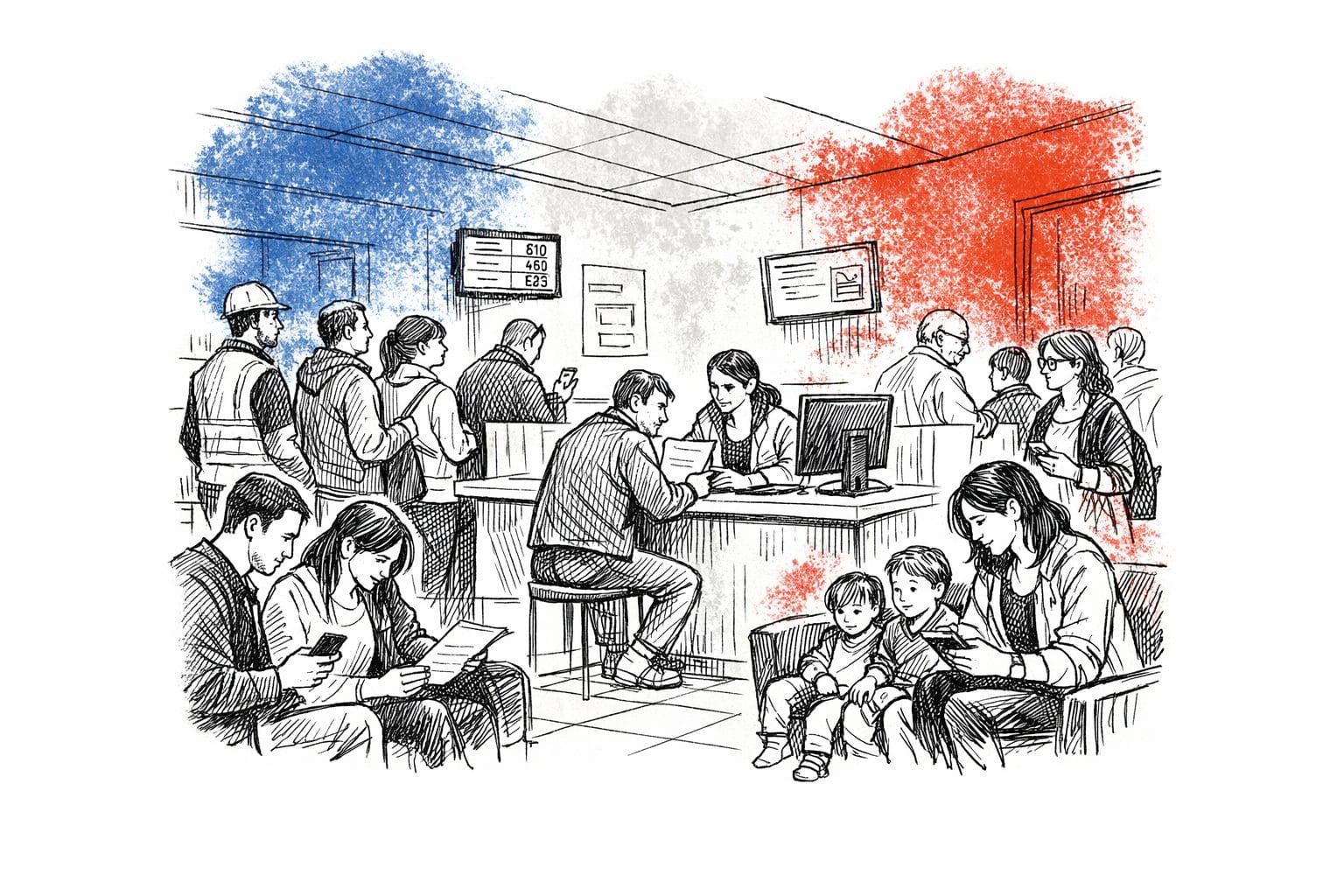
French Perceptions Skew Social Policy Toward a Dead End
France redistributes. Massively, structurally, for decades. And yet the social elevator does not function any better than in the United States—that country which Europeans regard with condescension as the symbol of frozen inequality. Americans are more optimistic than Europeans about intergeneration

Primary School Without Teachers
Since the first PIRLS assessment in 2001, the performance of French fourth-grade students in reading comprehension has declined progressively at each evaluation. By 2016, the gap represented minus 14 points over fifteen years. A ten-year-old child read less well than a child of the same age in 2001,

Book Review. "A Mobile Popular" by Aswin Punathambekar, Sangeet Kumar and Sriram Mohan
South India watches YouTube, shares memes, listens to television differently. Three researchers spent years observing what these uses construct politically. Their conclusion unsettles the usual certainties about algorithmic power: publics do not simply allow themselves to be manufactured. - Digital

Brazilian Circularity Rests on Unverified Data
In 2023, 32.9% of Brazilian municipalities provide contradictory answers to two national surveys on the existence of selective waste collection. In 2023, 1,837 municipalities, representing 32.9% of the total, provided contradictory responses to two different national surveys on this single question,

One-Person Households Exceed 76 Million in Europe
Europe now has more single-person households than households with children. In 2025, 76.1 million adults lived alone in the European Union, a 19.2% increase since 2016, and among those over 64, this figure jumped 22.1% over the same period. This is no longer a marginal phenomenon or a passing transi

Open Data on Public Procurement Remains Inert Without Civic Oversight
In South Africa, opening up public procurement data was not enough to reduce capture or losses. The Government Technical Advisory Centre (GTAC) published a report in 2026 drawing a key lesson: useful traceability requires civic oversight as much as technical standards. Three complementary tools—trai

The electric bus moves forward
Santiago put its first electric buses into service in 2018. The city now has more than 1,700, making it home to the largest electric public transport fleet outside China. Formal networks in Latin America display a younger fleet than in Europe: average age of 8.4 years versus 11.9 years, according to

Quantum Computing Is Being Written Without the South
Nearly a third of institutions that responded to the UNESCO survey declared they had no access to any quantum research facility. UNESCO documents a one-to-seven gap between Africa and Europe or North America in the number of quantum scientific events organized per country: a ratio that documents a s
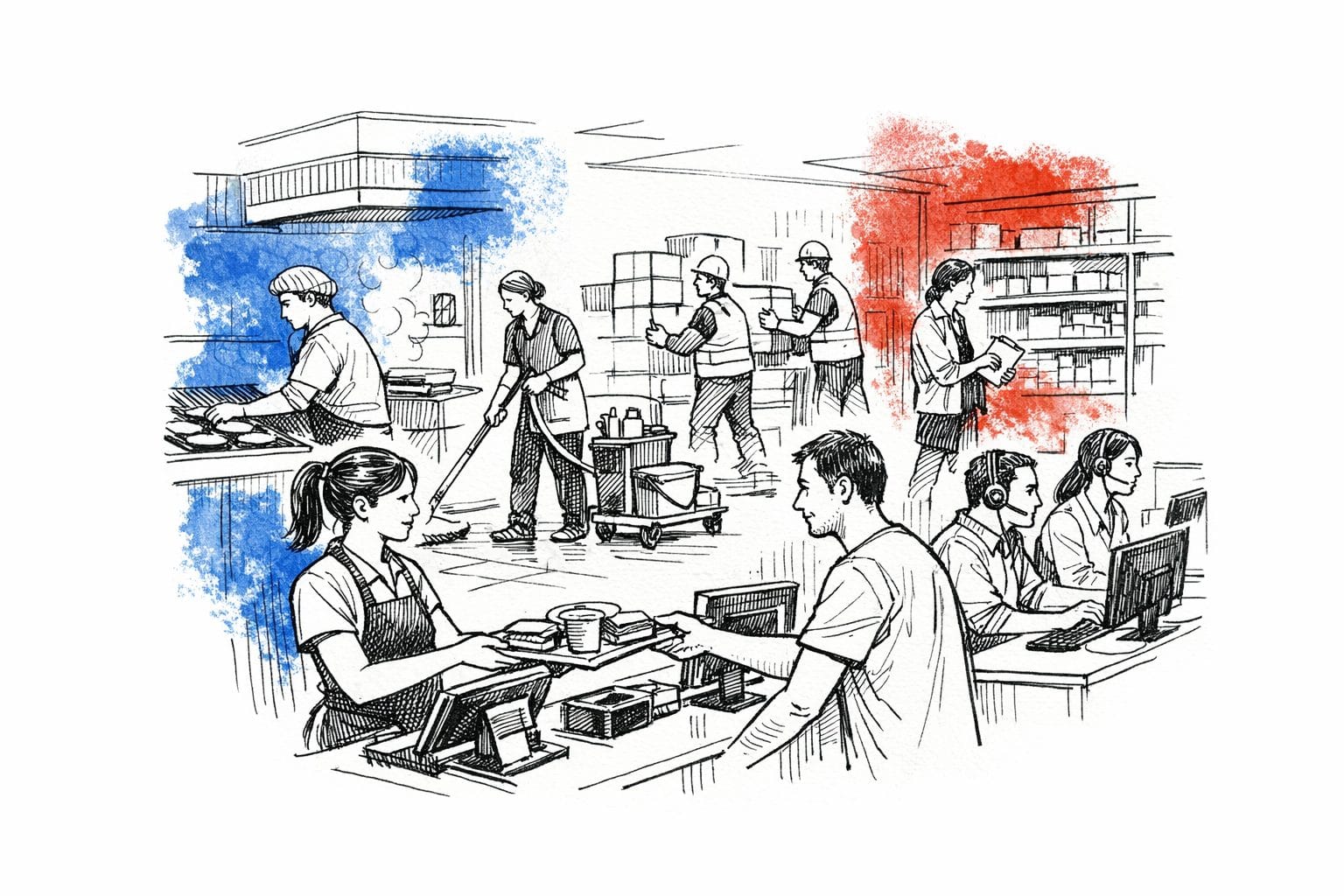
Job Growth Concentrates New Positions in Low-Wage Sectors
In 2024, INSEE counts 2.3 million working poor in France. This is the figure missing from the debate on purchasing power: millions of people get up every morning to go to work, and their salary is not enough to cover what they must pay before they can live. The share of fixed expenses in household i

Public Procurement Finances Foreign Industry
France spends 233 billion euros per year on public procurement. That's roughly what education, defense, and public health combined cost in the state budget. And a disproportionate share of this sum goes directly to finance factories located outside the national territory. France currently imports ne

AI Demands 77 New Skills in Jobs Most at Risk
In the United Arab Emirates, jobs most exposed to artificial intelligence now require an average of 77 new skills from their holders, compared to 22 for jobs with low exposure, according to PwC. This gap of more than three to one makes the Emirates a concrete place to observe a phenomenon that exten

Andean Energy Transition Stumbles Over Water Sharing
Ecuador rationed electricity for weeks in 2024, short on water in its reservoirs. The World Meteorological Organization's 2025 report documents severe droughts and their regional socioeconomic impacts, including agriculture and food security. Latin America produces more than 45 % of its electricity

Digital Sovereignty Is Measured by the Ability to Change Providers
The Joint Research Centre of the European Commission publishes a disturbing finding in 2026: administrations across the Union still poorly understand what their digital dependence truly implies. The report identifies four simultaneously failing levers—markets, infrastructures, skills, governance—and

Participatory Budgets Count Their Survivors
Porto Alegre invented the participatory budget in 1989, and the 2019 Atlas recorded approximately 11,690 to 11,825 experiments in 71 countries; the 2020-2021 edition estimated 4,032 processes in 2020. In Brazil, available data indicate a peak of 137 municipalities in 2004, followed by a decline thro

TradeMark Africa Cuts Commercial Formalities Time by Two-Thirds
In East Africa, goods were no longer waiting at borders for lack of roads: they were waiting for lack of data. The portfolio evaluation covering 2017-2023 estimates an average decline from 97 to 31 hours since the introduction of ICT4T systems, according to an independent assessment of its digital p

Everglades Restoration Advances Without Guaranteeing the Return of Wildlife
Seven major components of the Everglades restoration program are complete and four are fully operational, twenty-five years after its launch. The 2026 National Academies report records the first measured hydrological gains, but raises a problem that engineers had not anticipated in 2000: the goals o

The Secondary Diploma Has Lost Its Value as a Social Elevator
In Jordan, approximately 91% of students complete lower secondary education, a rate higher than that published for Germany in this series. Yet the World Bank ranks the MENA region among those where the returns to education remain among the lowest in the world. The diploma is there. The elevator, how

The IMF Identifies Three Productivity Brakes on Australia
Australia displays enviable economic health, but its productivity gains are eroding silently. According to the IMF, a growing number of market sectors in the country have advanced more slowly than they did on average in previous periods. The IMF identifies several factors, including the decline in p

AI's Productivity Gains Are Going to Capital
French companies have begun to measure what artificial intelligence brings them. What they don't show is who they pass it along to. And without institutional architecture to enforce it, they never will be. In financial services or software publishing, productivity nearly quadrupled between 2018 and
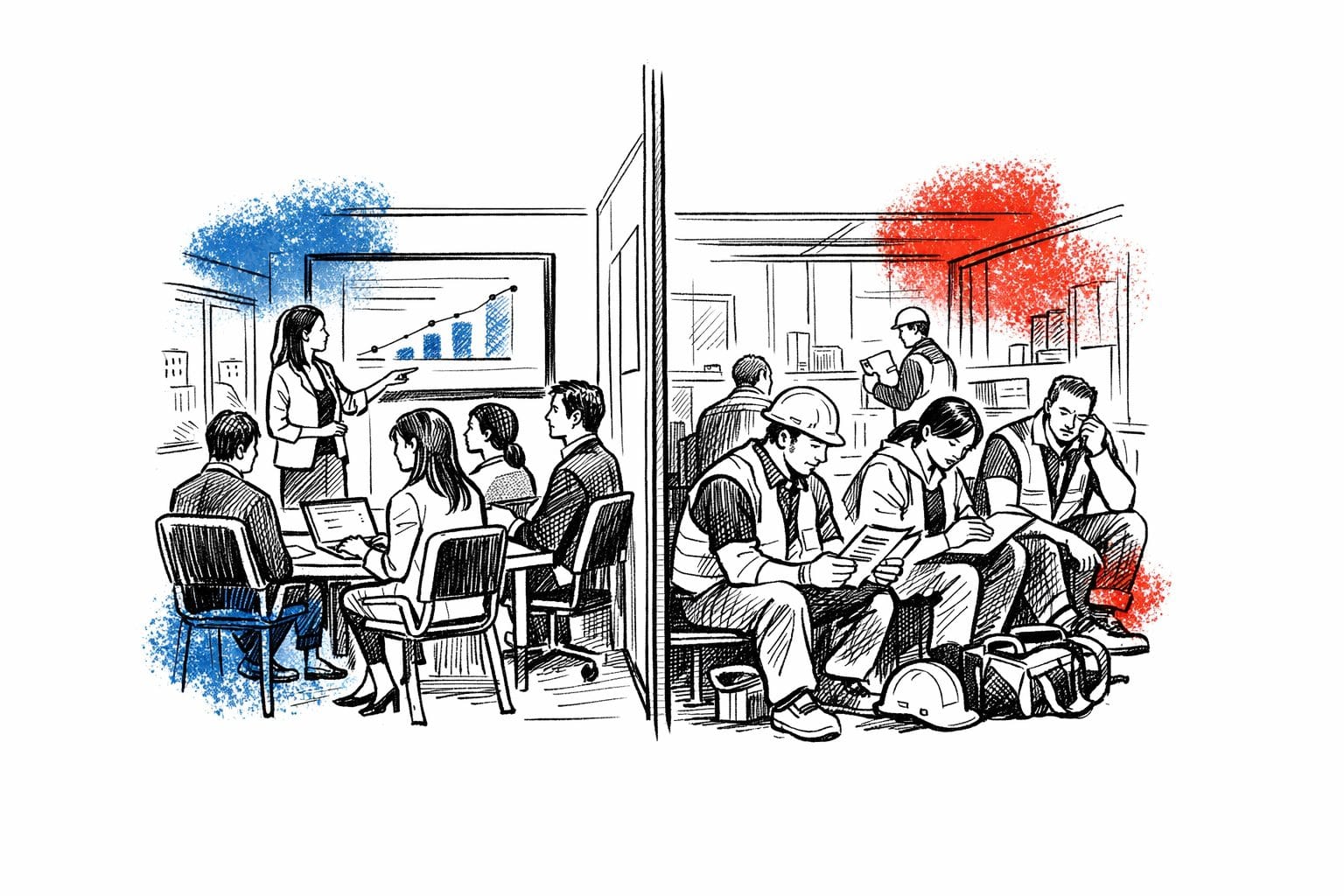
France Compétences spends more on graduates than on workers needing retraining
Fifty-seven billion euros a year to train French workers. On paper, it is one of Europe's most generous budgets. In practice, this system concentrates training on those who already have the most access to it, and leaves without retraining those for whom it would be decisive. The choice that 2027 wil
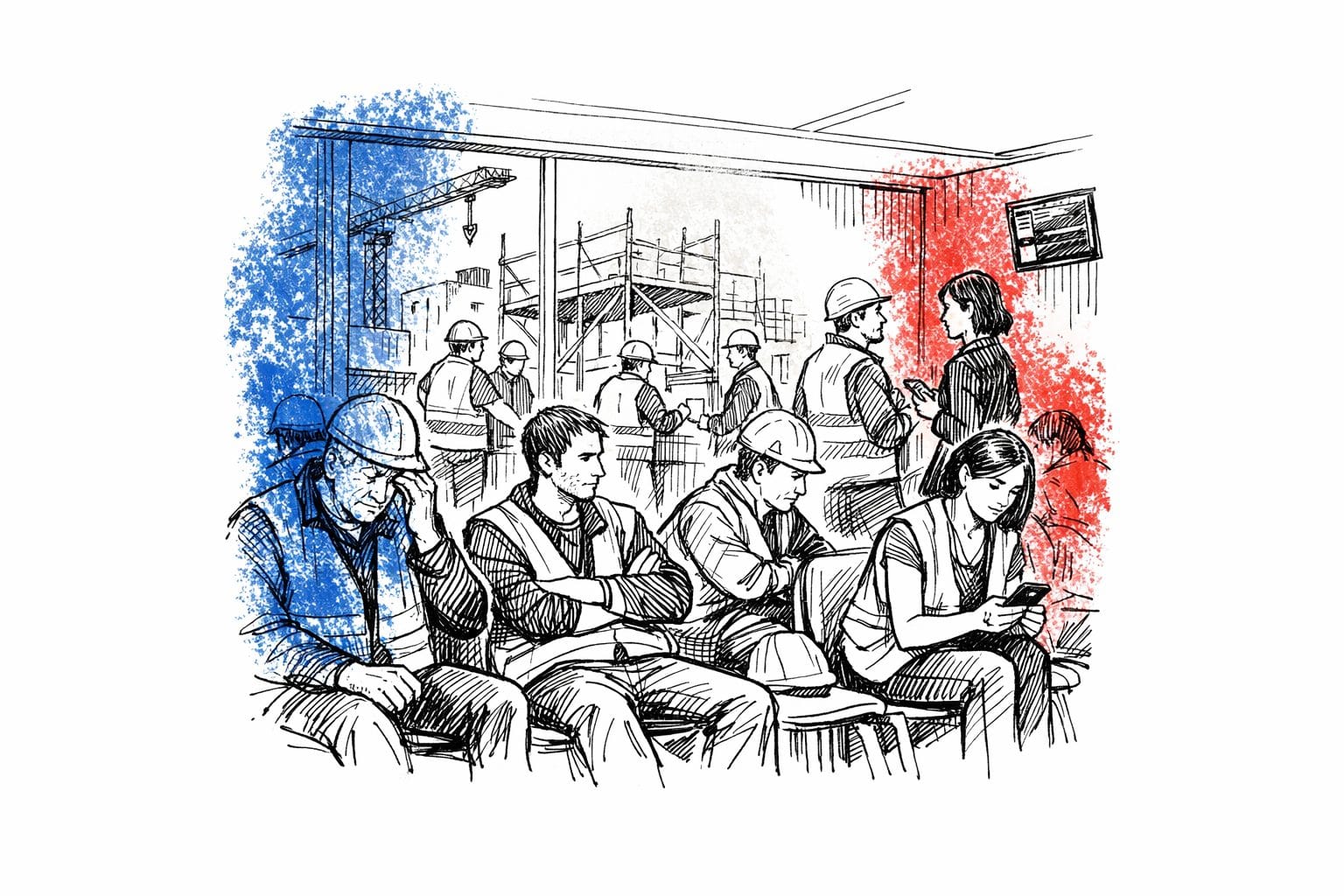
Raising the Retirement Age Hurts Workers' Pensions Most
A senior executive receives roughly 930,000 euros in pension payments over their lifetime. A manual worker receives less than 300,000 euros. The same system, the same rules, three times less money. Male senior executives can expect to receive 930,000 euros in retirement pension over their lifetime,