english

Rare Minerals and Satellite Data Are Sufficient to Erase a Territory's Autonomy
Greenland has 57,000 inhabitants and significant reserves of rare earth elements and lithium. This concentration attracts major powers even before deposits become exploitable. China has announced its desire to promote a "Polar Silk Road" and encourage participation of its companies in Arctic infrast
Putting Progress Back on the Presidential Agenda
The 2027 presidential campaign is opening. Until the first round, it will dominate public space: polls, tactics, sound bites. Meanwhile, six transformations are reconfiguring French life, treated at the margins of debate as in previous campaigns. This newspaper is taking the opposite approach. Each

Data Localization Laws Cost More Than They Protect
Transfers contrary to the PDPL are in principle subject to a fine of up to 5 million riyals; imprisonment of up to two years and a fine of up to 3 million target another offense—the unlawful disclosure or publication of sensitive data when intended to harm the person concerned or to obtain personal

Automation Brings Net Creation of Skilled Jobs
Between 2018 and 2022, robots created 2 million skilled jobs in five Southeast Asian countries and displaced 1.4 million unskilled workers. The net balance is positive. But this comfortable arithmetic conceals a widening fracture: the winners and losers are not the same people. For industrial robots

Global Maritime Freight at 3 to 5 Times Normal Rates, Economic Filtering and Geopolitical Gamesmanship
Since February 2026, a concurrent crisis has affected two of the planet's most critical maritime chokepoints. Global commerce operated on an assumption never written anywhere: at least one passage would remain open. This assumption collided with a new reality: differentiated economic effects dependi

Per Capita Electricity Consumption Has Been Declining Since 2004 in France
France produces low-carbon electricity in ever-increasing quantities, and its inhabitants consume less and less of it. The decree on the pluriannual energy programming plan (PPE 3), published in February 2026, raises nuclear production targets to 380-420 TWh per year for 2030-2035, compared to 360-4

Robots Create Unsustainable Semiconductor Dependency
South Korea has 1,220 industrial robots per 10,000 employees, the highest density ever measured in a country. This figure represents nearly triple that of Germany and Japan, and it is growing by 7% annually since 2019. At this level of automation, competitiveness is secured, but dependency on critic

20 Million Hectares Carbon-Certified in Southeast Asia but Less Biodiversity
In Southeast Asia, carbon credit requirements can diverge from biodiversity conservation requirements. A Perspective in Nature Reviews Biodiversity examines the structural limitations of carbon markets for conservation: optimizing carbon sequestration and preserving biodiversity are two distinct o

Biotech and Quantum Computing, New Bets for Gulf Sovereign Wealth Funds
The Gulf countries are no longer betting solely on AI: biotechnology and quantum computing are among the growing areas of interest for their sovereign wealth funds. This pivot is part of a diversification strategy: financing technologies with high research intensity, some of which could influence lo

China Floods Southeast Asia with Cheap Robots
China has exported a growing number of industrial robots across all its markets, with an upward trend. These machines offer competitive prices compared to Western equipment, which could be a game-changer for economies long excluded from automation. Except that access to equipment is not enough: with
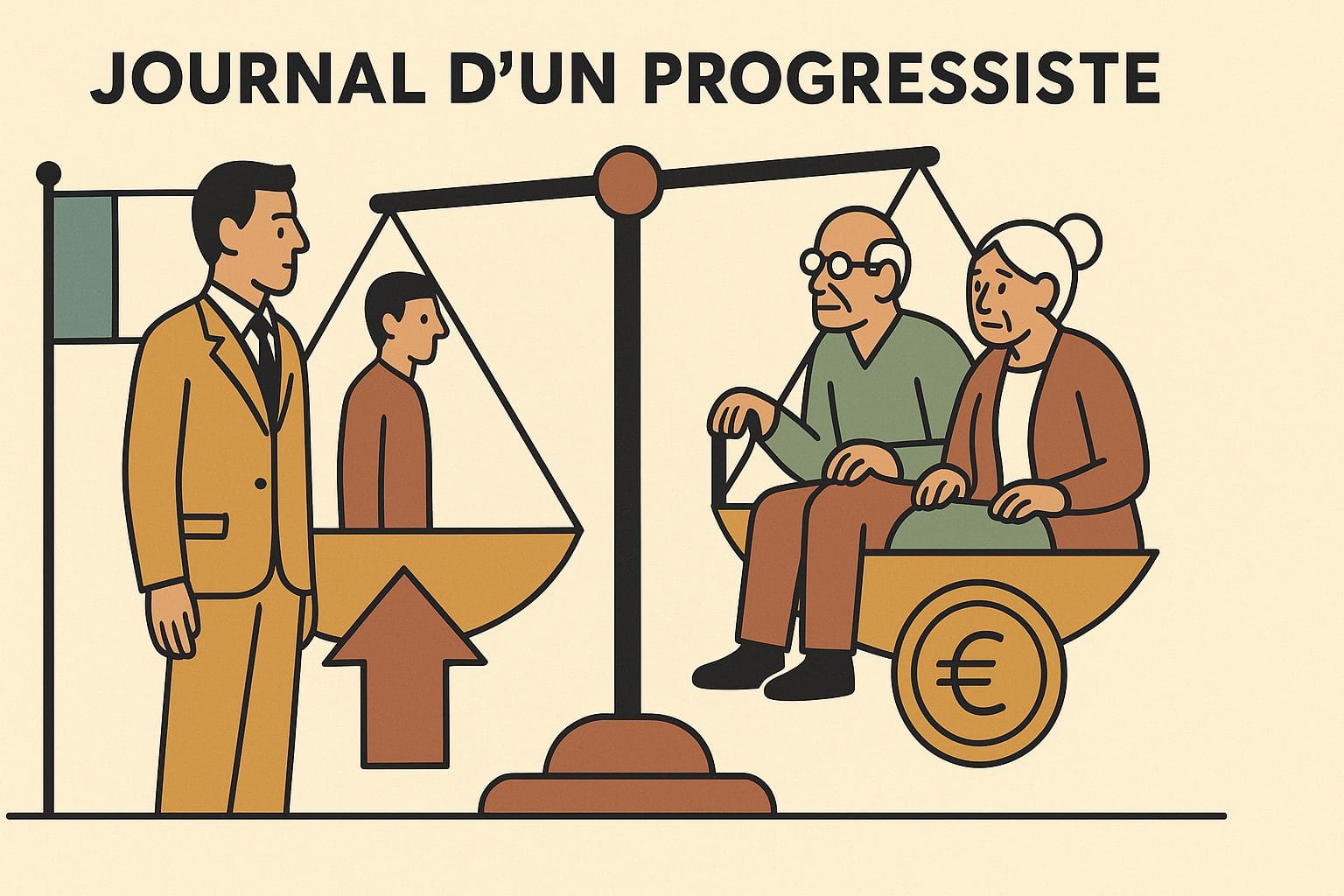
The French Retirement System Facing a 1.3 Active-to-Retiree Ratio by 2070
By 2070, France will have 1.3 active workers for every retiree, compared to 1.7 today. The 2026 report from the Pension Orientation Council adopts an assumption of 0.7% annual hourly productivity growth from 2040 onward; the average observed between 2010 and 2024 is 0.3% per year. Three levers exist

Since 2011, Human Rights Are Declining While Social Conditions Progress
The Global Social Progress Index 2026 documents a turning point, with global stagnation in social progress since 2021: human rights have fallen by nearly 6 points globally across 171 countries covering more than 99% of the world's population. This decline affects civil and political liberties, while

American Homogamy Explains 40% of the Decline in Social Mobility
Since 1980, Americans born wealthy have had fewer chances of sliding down the social ladder than before, and the probability of escaping the bottom quintile has barely moved. A study by Jonathan Davis and Bhashkar Mazumder for the Chicago Fed identifies factors likely to contribute to the decline in

Boston, San Francisco, Nashville: Lack of Electricity Slows Medical AI
American hospitals have validated algorithms. Their large-scale deployment encounters institutional and governance obstacles. According to the NAM discussion paper published on March 9, 2026, the fragmentation of health architecture and data limits digital transformation. The digital health market i

The Institutional Framework Deploys Renewables Faster Than Technology
In 2025, solar electricity produced in the Middle East costs 1.09 cents per kilowatt-hour. The renewable energy capacity installed in the MENA region reaches 43.7 GW, up 44% in one year, according to the Dii Desert Energy MENA Energy Outlook 2026. Deployment now depends on factors other than the ava

Depending on Foreign Funding Means Ceding Your Scientific and Political Agenda. The Example of Latin American Research
Fluctuations in external funding priorities influence research programs in the region. The termination of American aid in 2025 may have weakened some programs, without demonstrating by itself a general shift in scientific priorities. Clinical research requests submitted to Anvisa increased by 11% be

Returning One-Third of Cultivated Land to Nature Without Land Compensation
France must identify in its national restoration plan the surfaces to be restored according to habitat categories in the European regulation, without a fixed French target for agricultural land withdrawal. The commitment and deadline are real, but existing fiscal and financial levers are insufficien

5 Years of Life Expectancy Separate Europeans According to Their Access to Primary Care
At 65 years old, a Spaniard can expect to live another 21.9 years; a Bulgarian, only 16.9 years. These two men are citizens of the same European Union, subject to the same single market rules, theoretical beneficiaries of the same cohesion funds. The observed gap cannot be attributed or compared to

Southeast Asian Logistics Hubs Weakened by Energy Dependence
Supply chain disruptions linked to geopolitical tensions can affect energy costs in regional production hubs. Thailand, Vietnam, and Indonesia have spent a decade building logistics infrastructure capable of capturing the diversification of global supply chains away from China. Their industrial ener

The Ratio of Caregivers for Those 80 and Older Will Be Cut in Half by 2050 in Europe
The ratio of potential caregivers (people aged 20 to 64) for each person aged 80 or older is expected to deteriorate significantly by 2050 in the European Union. This demographic shift is putting pressure on systems built on a single financing logic. According to the European Commission, 38.1 millio

24 European Countries Out of 27 Struggle to Recruit Teachers
European education systems are experiencing an open shortage: according to the 2023 European monitoring, 24 of the 27 EU member states reported difficulties filling teaching positions. This shortage affects very different countries, from Finland to Greece, from Poland to Spain—but its mechanisms are

Africa's Creator Economy Doubles Its Creator Base Thanks to Regional Fintechs
In two years, the number of active African creators has nearly doubled, and revenues come from sources that global platforms had not anticipated. According to Coachli Africa, the continent's creator economy is experiencing significant growth. The audience base and content quality have not fundamenta
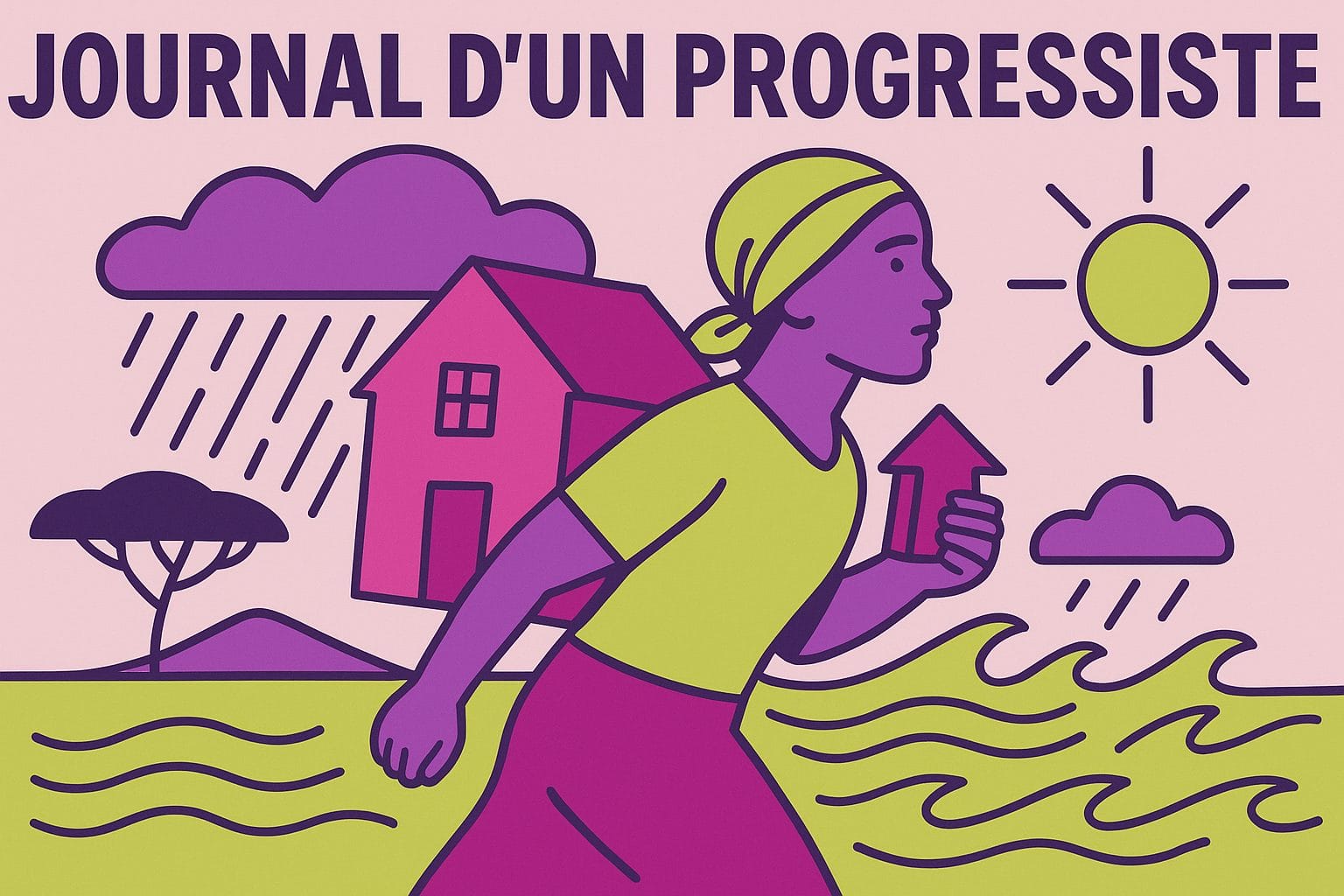
500,000 Displaced in Southern Africa Due to La Niña Before Summer Even Arrives
Between December 2025 and March 2026, flooding linked to the La Niña phenomenon displaced a significant number of people from their homes in Southern Africa. The absence of financial preparedness can delay response and recovery after a disaster, without by itself demonstrating a sustained spiral of

AI Blocks IT Outsourcing Markets
In Morocco, internship offers (PFE—end-of-studies projects) intended for young graduates have been declining since April 2026. This signal is the first concrete figure of a mechanism that precedes job elimination: the automation of junior-level tasks erases the entry gateway before anyone has crosse