english

Sport in Europe: Freeing Up Time Does More Than Multiplying Infrastructure
Forty percent of Europeans who do not play sports cite the same reason: they don't have time. This figure comes from Special Eurobarometer 472, a survey conducted in December 2017 across the 28 EU member states and published in 2018. Since 2015, 118 million people have participated in the European W

Too Much Solar Kills Solar
In 2025, the French electricity grid recorded 513 hours at negative prices: moments when producing electricity costs money instead of making it. This figure was 147 in 2023. In three years, it has been multiplied by three and a half, and it tells a story that no one wanted to write at the moment of

Restored Reefs, Commons Without a Guardian
In the Asia-Pacific region, significant expanses of coral have been restored since 2020. Local human pressure, including fishing, can compromise restoration. Ecological restoration produces variable results depending on whether local governance arrangements accompany technical replanting. Customary

AI in Africa: The Electricity Bottleneck
African demand for computing infrastructure must rise from 0.4 gigawatts today to 1.5 to 2.2 gigawatts by 2030, according to McKinsey, but the continent has not yet stabilized the power grids that supply its households. The IMF estimated in 2026 that AI's gain for African economies caps at 0.2% of G

Young People's Mental Health: Without Early Care, Inequality Takes Root for a Generation
Globally, suicide is a major cause of death among adolescents and young adults. One in seven young people aged 10 to 19 live with a diagnosable mental disorder, according to the WHO. In Latin America and the Caribbean, more than three in four people with a mental disorder receive no care. This treat
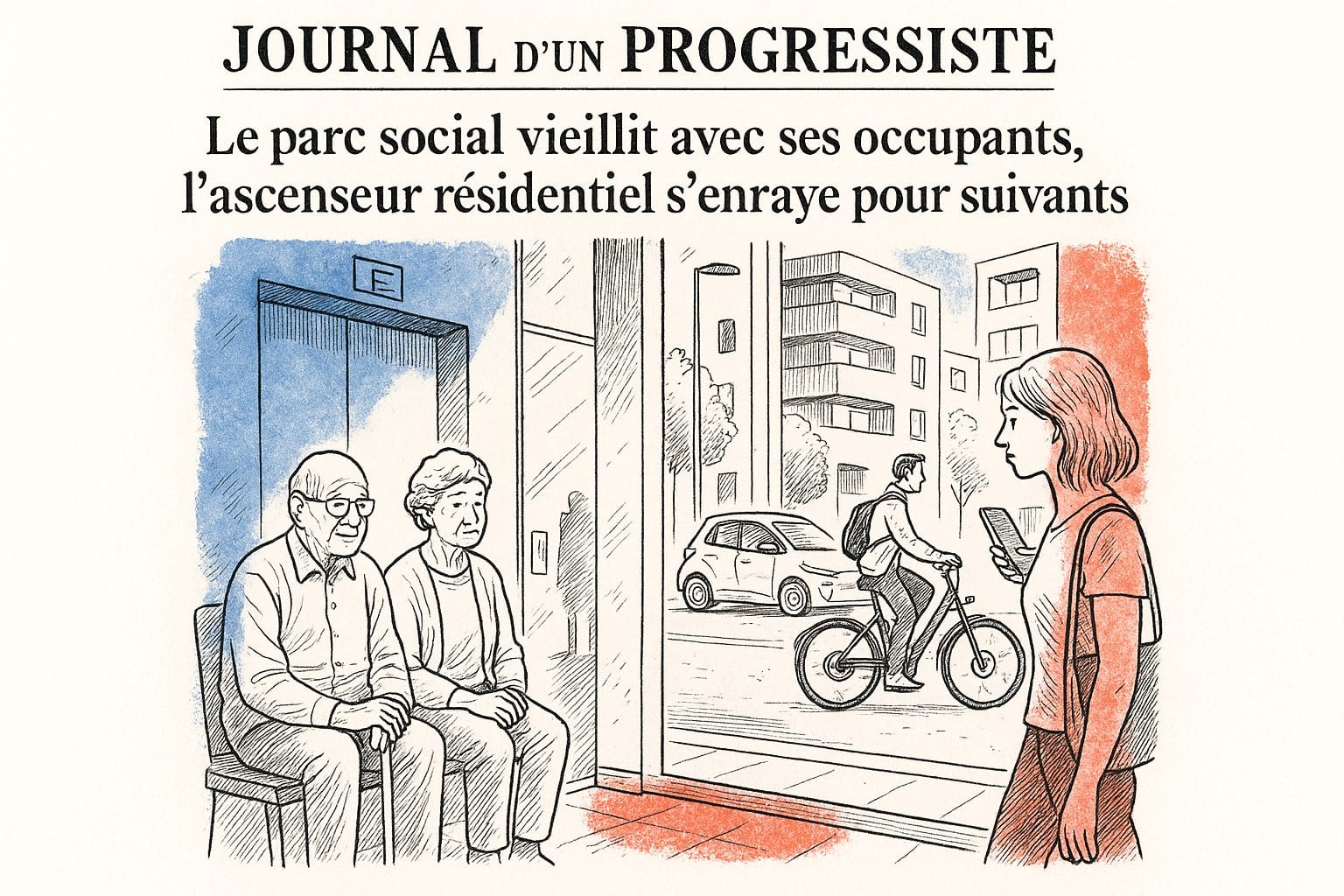
Social Housing Aging Alongside Its Residents, the Residential Ladder Stalls for Those Coming Next
In 2025, 2.87 million households are waiting for social housing [11]. Only one applicant out of seven finds satisfaction each year [11]. The housing stock is freezing: the tenant mobility rate fell from 9.3% to 7.1% between 2019 and 2025 [10]. An additional percentage point of turnover would unlock

Pacific: customary power never surrendered its place
In 2006, rioters set fire to Chinatown and damaged Parliament in Honiara in a context of political crisis. In the Pacific island states, customary power and liberal democracy have coexisted since independence without one absorbing the other. Every political crisis brings hereditary assemblies and co
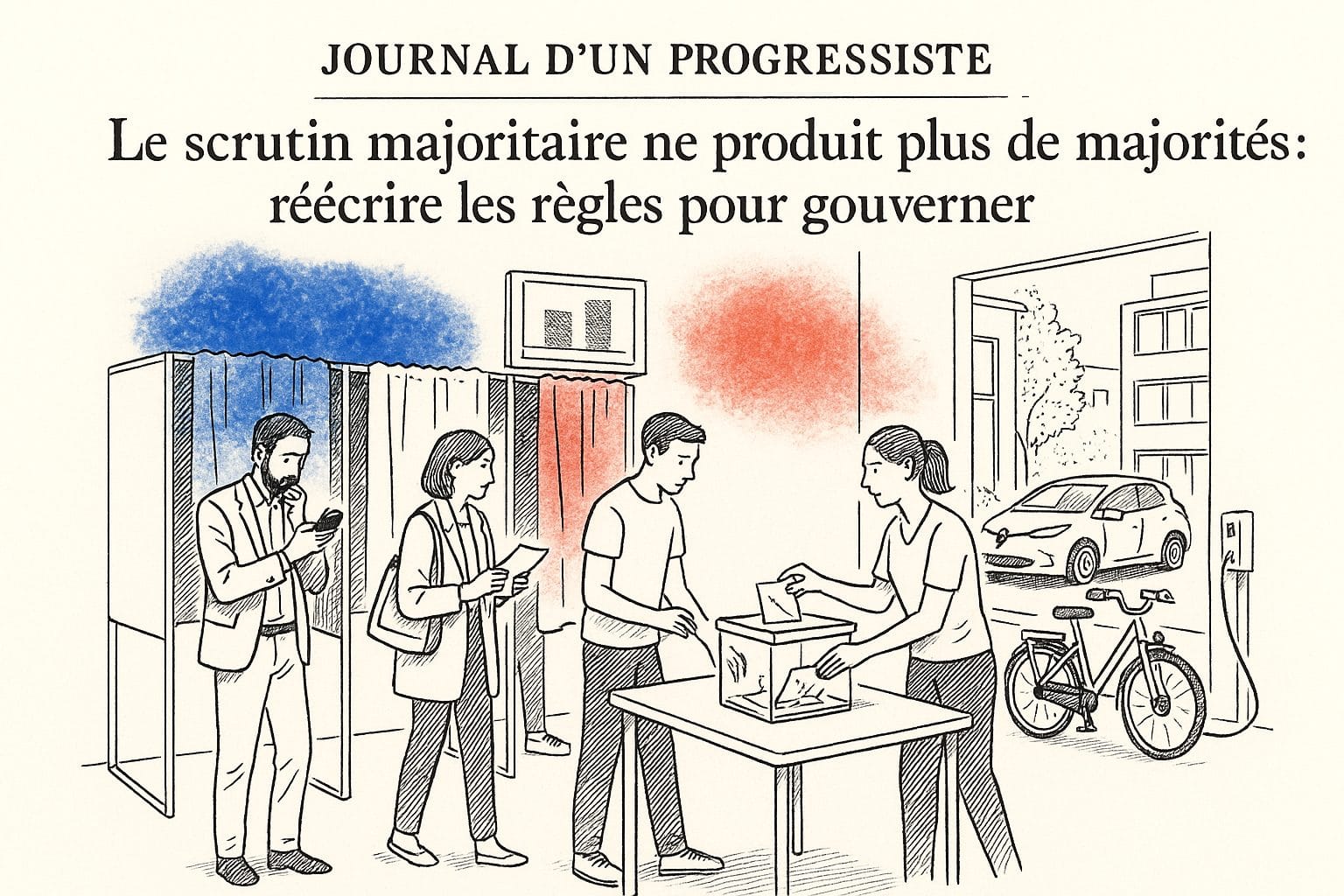
First-past-the-post voting no longer produces majorities: rewriting the rules to govern
Four prime ministers in fifteen months [9]. Trust in the National Assembly fallen to 20 % [1]. France holds the European record for democratic distrust, under a first-past-the-post system that no longer produces the stable majorities it was supposed to guarantee. The choice facing us in 2027 is arch
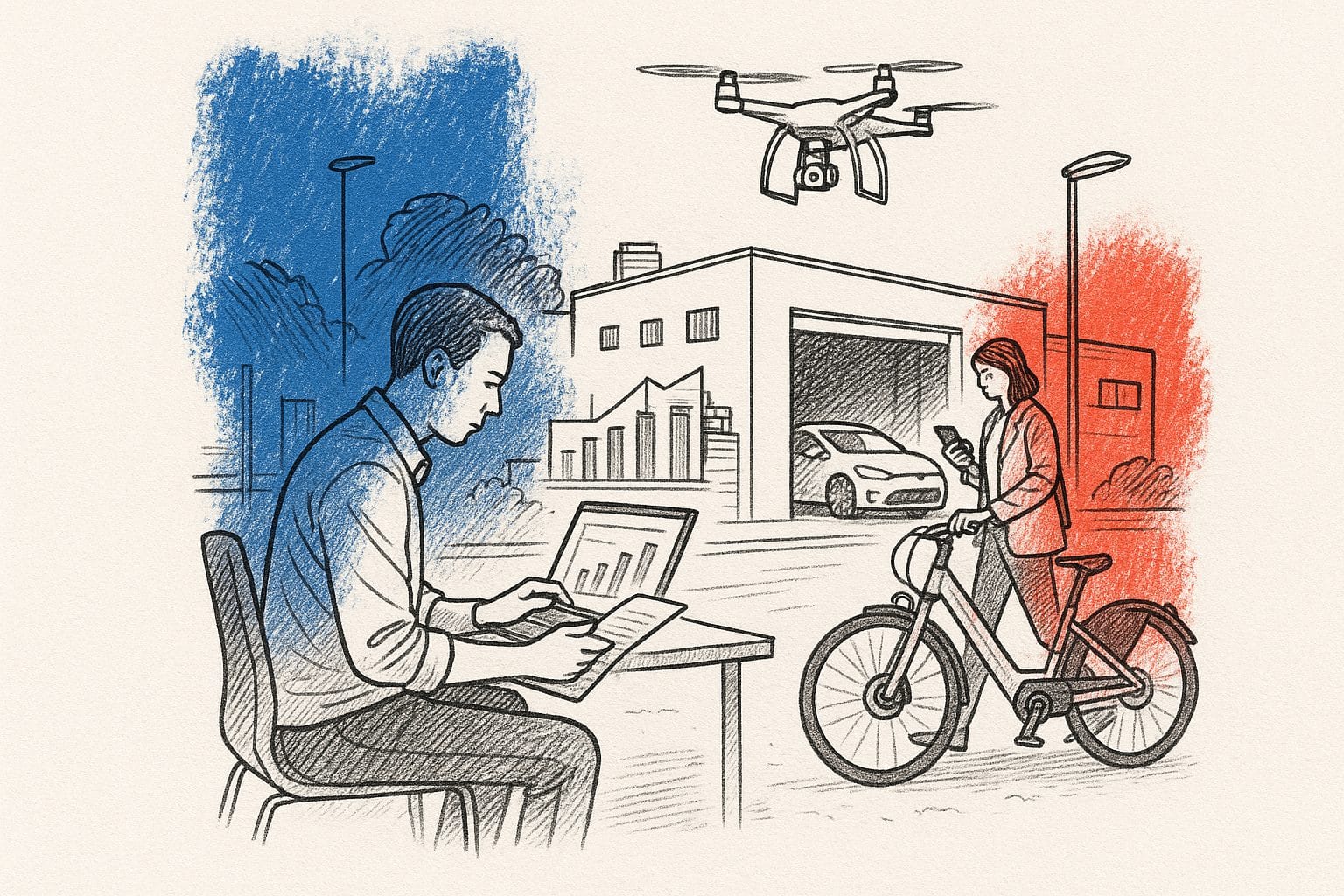
France Rearmed Its Budget, Not Yet Its Industry: The Shift Imposed by the Drone War
French defense spending has risen 56% since 2017 [1]. Yet the armed forces have only a few thousand drones while Ukraine deploys 15,000 per day on the front [7]. The decision to be made by 2027 is architectural: maintain an industrial model tailored for high-end exports, or pivot toward mass product

Algorithms Impoverish Culture at Each Iteration
Every time a large AI model trains on the outputs of its predecessor, it erases a little more of what was already marginal in the original data. This isn't a fixable bug: it's a statistical property of iterative training. And what the machine forgets first are rare languages, narrative traditions th

Maritime Decarbonization: Pacific Islands Don't Have Until 2050
Maritime transport burns 300 million tons of heavy fuel oil per year and produces roughly 3% of global greenhouse gas emissions. Industry experts project a median reduction of 50% by 2050 compared to 2008 levels, according to a study published in Earth's Future. The subgroup of experts with more tha

Home Insurance in France: Premiums Anticipate Risk Maps
Home insurance premiums jumped 13% in one year. Reinsurers are adjusting their exposure models across territories, progressively shaping insurance decisions. Market tariff adjustments are happening in parallel with public policy decisions. This gap will structure the

Pandemic Preparedness in Africa: Progress Dependent on Foreign Aid
Africa has gained nine points out of one hundred in five years in its capacity to detect and contain an epidemic. This measurable leap, where the continental average score rises from 32.4 to 41.5 out of 100 between 2021 and 2026, according to the Africa Health Security Index, says something real abo

French Debt: Over 75 Billion Euros in Interest Annually Weighing Heavily on Growth
France dedicates more than 75 billion euros each year to servicing its debt alone—more than the combined budget for higher education and research. Public debt reaches 115.7% of GDP at the end of 2025, while the OECD projected actual growth of 0.9% in 2026, compared with 1.8% for the median of its me

Public Debt Eats into Space for Health, Education, and Climate
In several Latin American countries, debt interest absorbs a significant share of public resources. IMF data places regional gross debt at around 56% of GDP in 2015 and 71% in recent years. A growing number of countries have seen this ratio increase between 2019 and 2025. The continent is not alone:
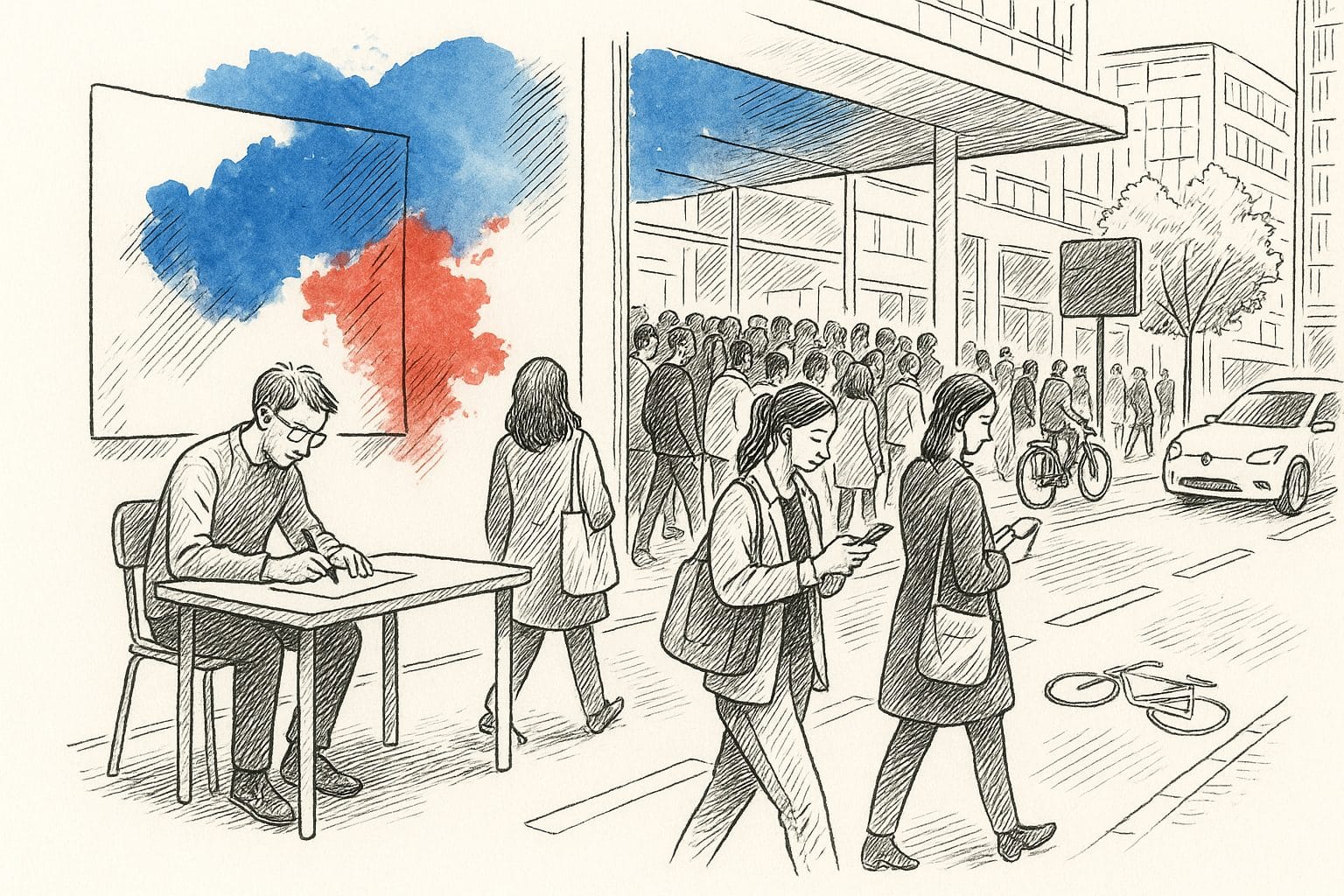
Culture Weighs More Than Before, Creators Are More Isolated
Only 52,600 of the 11 million creators present on streaming platforms generated more than $10,000 in royalties in 2023 [10]. At the same time, platforms use their works to train generative AI models without compensation. By 2027, a choice becomes unavoidable: establish a mandatory collective license

Asia's Forests and Reefs Are Disappearing
Asia is home to some of the planet's richest coastal wildlife, yet they are vanishing. Governments sign agreements, mark zones on maps, publish roadmaps. Between declaration and actual protection lies a gap: zones protected on paper often remain without genuine management or funding. - Asia is prote

Administration Through Algorithms Gains Speed but Loses Legitimacy
The United Arab Emirates has accelerated the automation of certain public decisions. The UAE deploys AI tools in some public services, notably tax compliance, but decisions on social support fall under a legal grievance mechanism. This governance choice poses a question to political science that it
Fewer workers, more retirees: at what age, at what cost?
INSEE projected a peak of 30.5 million workers in 2040 in a July 2022 document, after which this number will drop to 28.3 million in 2080. Behind this figure lies an intergenerational contract under mounting pressure. The pay-as-you-go pension system rests on three variables—contributions, pensions,

Semiconductor Value Chains Are Being Recomposed
Southeast Asia has been assembling chips for thirty years, and the AI wave amplifies the significance of the region's front-end manufacturing deficit, without alone proving a complete shift in hierarchy. Of 64 new fabs planned in Asia by 2029, six are planned for Southeast Asia; the other 58 are pla
Rent absorbs nearly three of every five income units for the poorest tenants
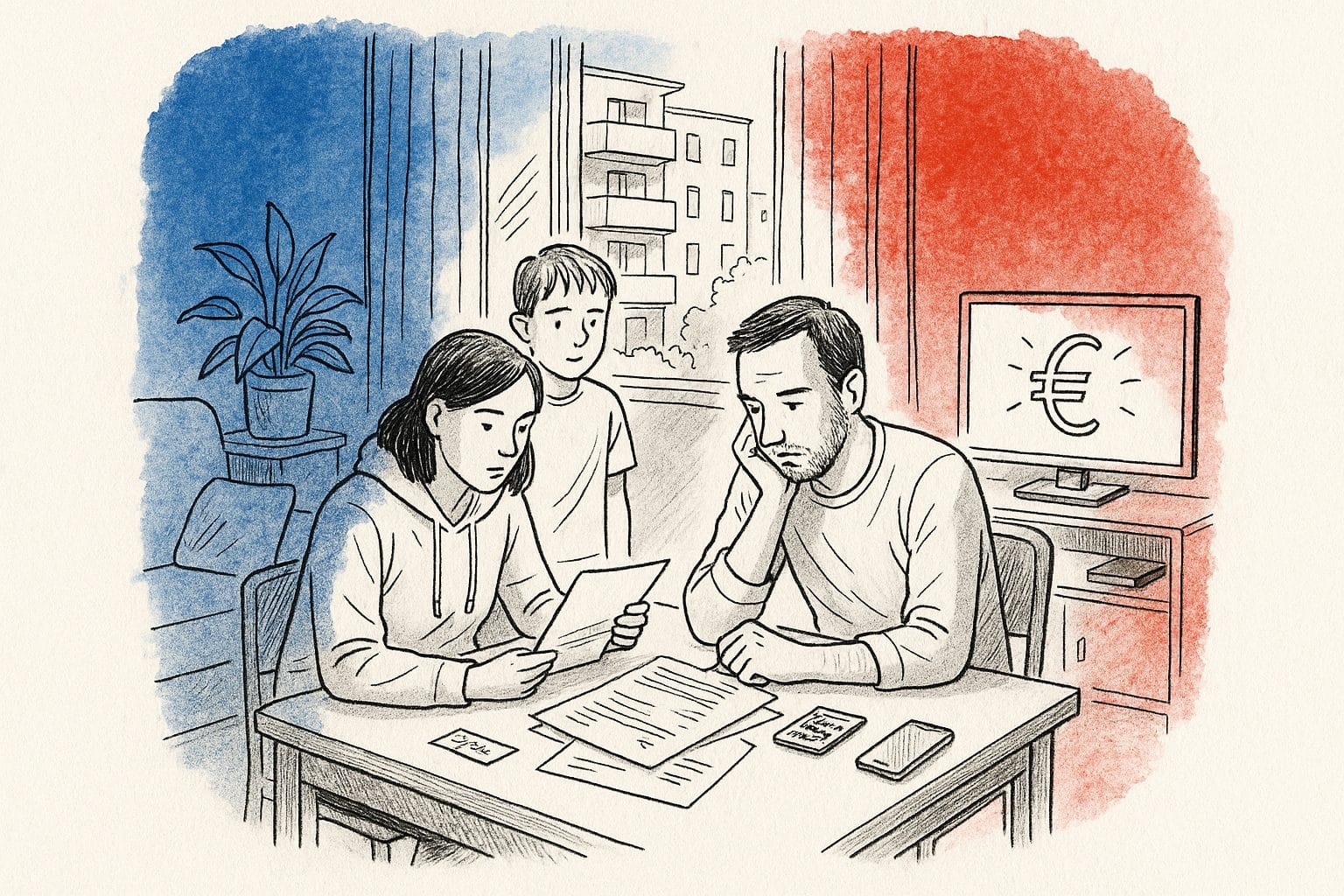
For a private-sector tenant among the poorest 10 percent, rent absorbs 59% of income before any other expense [1]. After housing allowances, it still absorbs 41% [1]. Meanwhile, housing starts have fallen nearly 31% over five years and more than 2.7 million households are waiting for public housing
French and Europeans Save for Others
Thirty-three trillion euros. That is the savings of European households, one-third of which finances projects abroad [2]. At the same time, the gap in real disposable income per capita between the EU and the United States has doubled in twenty years [2]. The Union does not have a money problem. It h

With Time Banks, China's Third Way to Support Seniors
In certain Chinese cities, retirees participate in community mutual aid activities and accumulate credits convertible into care services. In Indonesia, a pilot program of community-based long-term care centers was implemented in connection with local public health structures: you give today, you rec
Birth Still Determines Destiny, and Public Money Reinforces This Rule
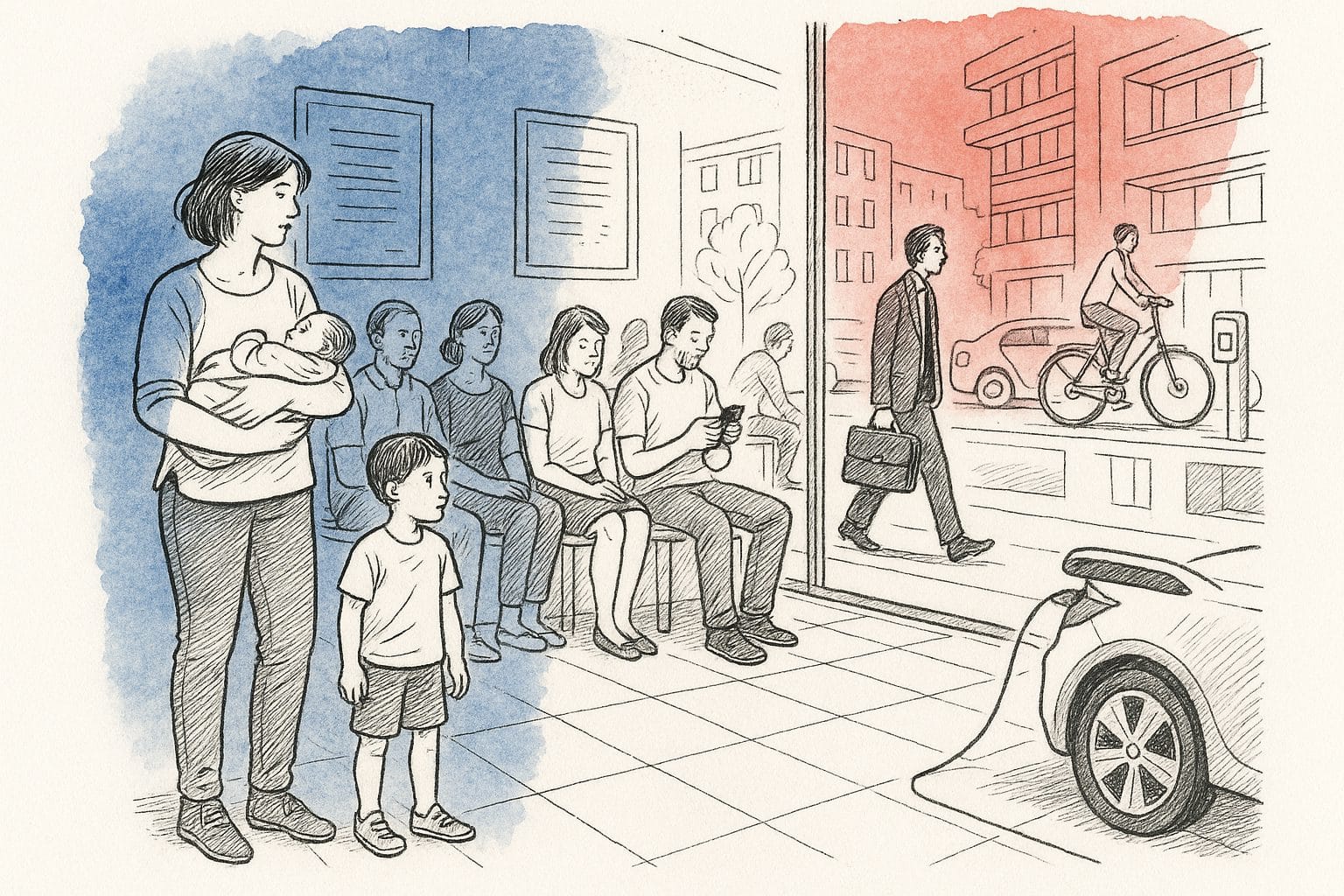
Every year, French companies receive 69.8 billion euros in payroll tax cuts, with no conditions on wages or training [12]. At the same time, a child born into a modest family has 18% fewer chances of accessing early childhood education before age three [11]. The 2027 choice is clear: transfer wage-s