english

Producing Science Is Not Enough to Make It Usable
The United States remains the world's leading investor in research and development. The National Science Foundation's Science and Engineering Indicators 2026 document persistent dominance in knowledge production, but show that the diffusion of this knowledge depends on mediating institutions whose

Mutualization Sacrificed at the Altar of the Algorithm
IoT sensors are transforming insurance into a prevention service, but this transformation is not neutral. In Latin America, where insurance penetration is generally low compared to major advanced economies, the promise of fairer pricing masks a symmetrical risk: that of increased segmentation that f
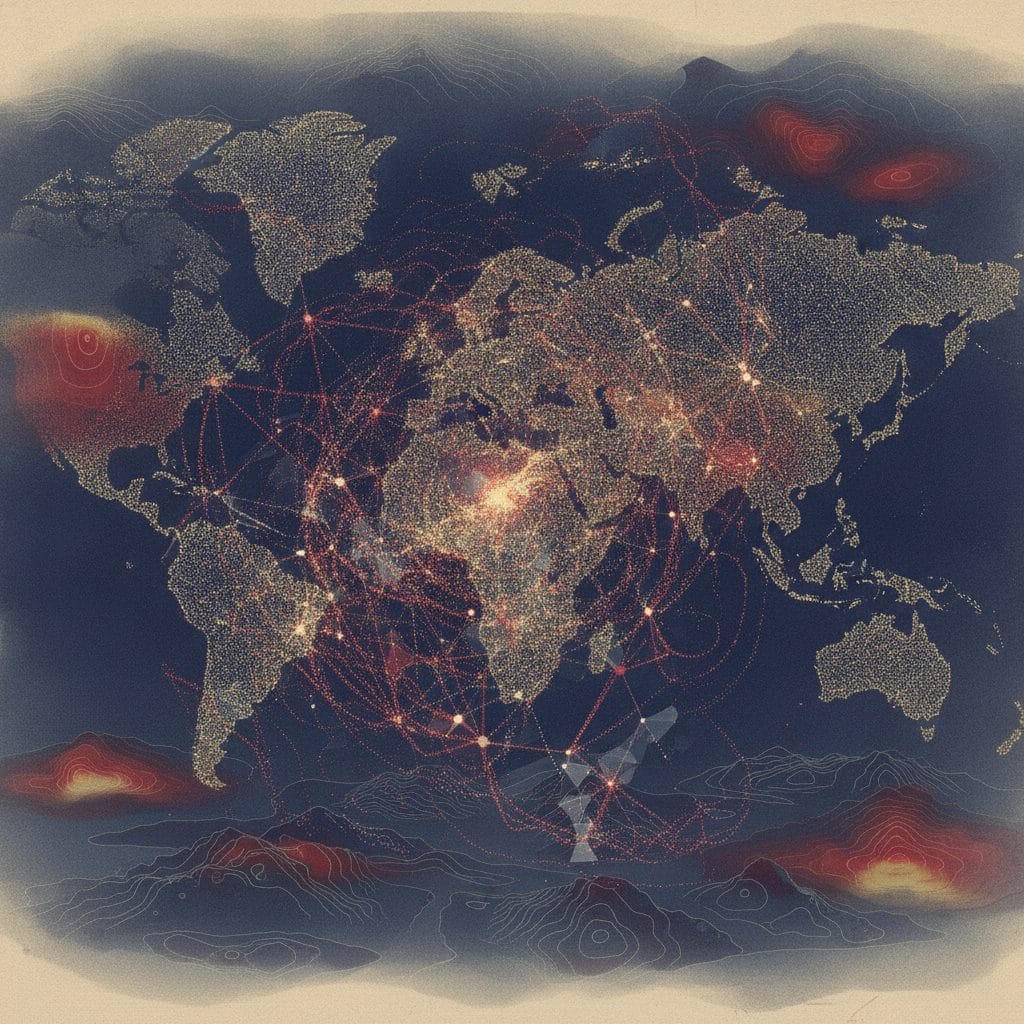
Elections Without Power: Asia's Temptation with Discreet Surveillance
In Southeast Asia and South Asia, governments can maintain elections while limiting the effective exercise of power by the elected. Democratic indicators measure many political effects of surveillance, but they do not necessarily have a uniform variable that is directly comparable across each techni

Schooling Without Education: Making Promises We Cannot Keep
In Latin America, almost all children go to school. The problem is what happens there. According to the OECD, advantaged students in Latin America score on average worse on PISA evaluations than disadvantaged students in wealthy countries: universal schooling has been constructed, but the quality ne

Training Graduates for Different Times
Technicians and skilled workers trained in Latin America can migrate to other regions to work there. Cognitive Market Research publishes commercial market estimates for TVET, but the accessible source does not publish TVET wage premiums of 2 to 4 percent in Latin America and 15 to 20 percent in Asia
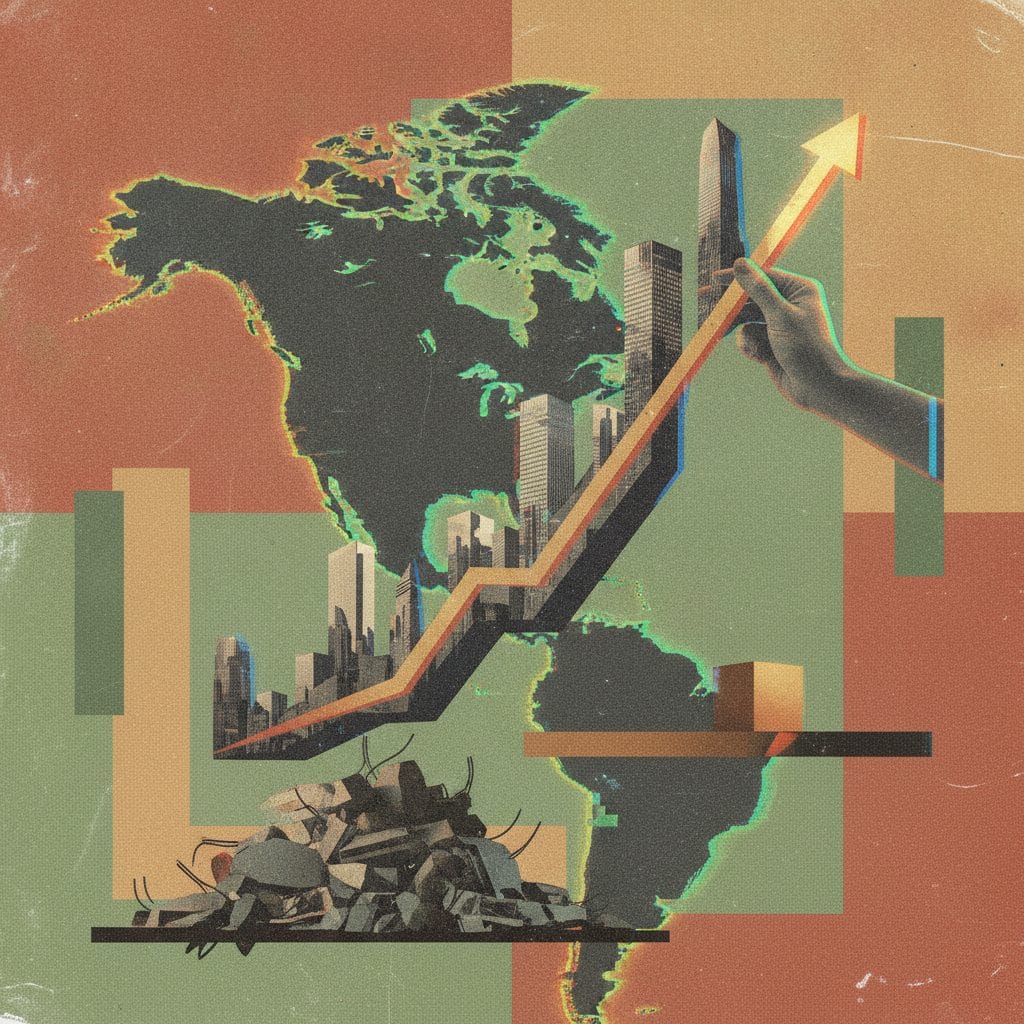
US Real Estate: Prices Followed the Rich, and the Market Followed the Prices
In the United States, real estate prices have tracked average income since 2015, but they have outpaced median income. This gap, documented by the Federal Reserve Bank of San Francisco in a 2026 economic letter, is consistent with demand driven more by high incomes, but does not on its own demonstra

Post-Quantum Cryptography: An Opportunity for States That Invest
Data encrypted today using public-key mechanisms vulnerable to quantum computing can become decryptable later by an adversary who has recorded exchanges and possesses a cryptographically relevant quantum computer. This threat, called "harvest now, decrypt later," makes an anticipated cryptographic t

AI Doubles Freelancer Productivity Without Changing Their Status
In certain contexts, freelancers can use language models to accelerate specific tasks. Their incomes may be lower than those of an equivalent formal employee, and platform workers often face significant social protection gaps. AI can improve their individual performance, while their status under lab

Nuclear Energy Bets on Rivers That Will No Longer Cool
The Arab region is currently warming approximately twice as fast as the global average, and engineers designing its future nuclear power plants know this. An IAEA source mentions 15 reactors proposed by 2040; the official program currently published focuses notably on a first plant with two units, i

AI Is Everywhere But Invisible in the Accounts
Atlassian reports that 6% of executives are certain they can cite clear examples of organizational ROI; ADP reports AI usage and worker sentiment. The observed gap is consistent with measurement limitations and revenue realization delays, but it alone does not prove structural inadequacy. - In Austr

Universal Coverage Hides Two-Tiered Mental Health
In Europe, having health insurance does not guarantee access to a psychiatrist. The World Health Organization documents a gap between legal coverage and actual coverage that disproportionately affects already vulnerable populations. Four countries—Czechia, Estonia, Finland, and Ireland—have launched

The Same Vaccine Protects Three Times Less Depending on the National Infrastructure That Deploys It
Seasonal influenza vaccines are available every year in EU/EEA countries, but their financing arrangements and patient costs vary by country. Vaccination coverage in adults varies across European countries. Coverage gaps likely result from a combination of administrative, economic, behavioral, socia

Three Frameworks for AI Agents, None to Converge Them
In January and February 2026, Singapore and NIST launched initiatives specific to AI agents; the European Union already had the AI Act, a general regulation on AI that came into force in 2024. The initiatives have partially common objectives, but different statuses and mechanisms; no primary evidenc

Regulating the Cloud Instead of Building It Is Not Enough
According to Gartner, European sovereign cloud IaaS spending is projected at 6.868 billion dollars in 2025, 12.587 billion in 2026, and 23.118 billion in 2027. The ECB estimates that international Visa and Mastercard systems process 65% of card payments in the eurozone; this figure cannot be general

When the Pension System Devours the Future of Young Countries
In 2019, the poverty rate among pensioners was 35% in Lithuania, 51% in Estonia, and 54% in Latvia. These rates reflect multiple economic, social, and institutional factors. - In Central and Baltic Europe, the ratio of workers to retirees will decline from 5.5 in 2005 to 2.8 in 2050, according to Br

Green Spaces Cool Down Neighborhoods and Gentrify Them
Planting trees to combat urban heat can worsen the precarity of those it purports to protect. An international research team studied this phenomenon at the continental African scale: green-blue developments are associated, in the study, with an increase in housing price indices and indicators of eme

Adapting Infrastructure to Climate Change Costs More Than Budgets Provide
France has a precise official climate trajectory. France has climate adaptation financing mechanisms, but the PNACC-3 does not quantify a global financing specifically dedicated to the entirety of infrastructure adaptation cost increases. According to Météo-France and the reference trajectory TRACC,

Regulating Others' AI Does Not Make You Sovereign
Available sources do not allow for a precise determination of how the number of domains covered by African national AI policies has evolved. This regulatory dynamism is real, but the figures do not clarify whether these frameworks are building sovereign technological capacity or organizing the insti

The Same Interface for All, Power for One
FIFA and Lenovo have deployed Football AI Pro for the 48 teams competing in the 2026 World Cup, a platform capable of analyzing several hundred million pieces of football data to produce tactical analyses, graphical representations, and 3D visualizations. Uniform access to the same tool appears to l

The State Plans the Withdrawal of Mountains Becoming Inaccessible
A report from the General Inspectorate of Environment and Sustainable Development published in 2026 raises a question that territorial development policy has long avoided. The report indicates that maintaining certain access routes can become technically lengthy and financially prohibitive, which ca

Geopolitical Fragmentation Weighs on Growth More Than Trade Tensions
In one year, Western Asia's growth fell from 3.6% to 1.4%. This deterioration is primarily associated with regional conflict and the resulting economic disruptions; a predominance of regional governance is not established. The 4.2% rate concerns an ASEAN growth forecast for 2025; it does not allow,

Financing Research Is Not Enough to Create an Advantage
In 2024, China became the world's leading R&D executor according to an adjusted international comparison, surpassing the United States for the first time. The United States retains comparative advantages in several categories of highly-cited patents and in venture capital-financed innovation, but th

Who Owns the Cable Owns Public Services
In the insular Pacific, submarine cables have become important for the continuity of communications, digital governance, and certain public services, but the precise effects vary according to countries and relief mechanisms. The OECD identifies reliable and affordable Internet access as a critical c

Housing Pressure Survives Demographic Stagnation
A population that stops growing can still generate sustained housing demand for decades. New Zealand illustrates this with rare methodological rigor: Stats NZ now projects families and households by age, sex, and composition type across its 16 regions, 67 territorial authorities, and 21 local counci